-
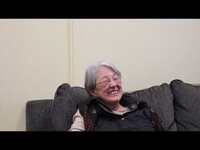 Interview with Margaret Cox
 This interview features Margaret Cox, a long-time activist, discussing her involvement with Herland. She first joined in 1983. Margaret reflects on the origins of the group, which evolved from a women’s reading group called LaSalle de Femme, and later became a women’s bookstore and community space. She describes how the space served as a resource for women, offering services like counseling, consciousness-raising sessions, and retreats. These retreats, in particular, were significant for creating safe spaces where women could relax and heal, away from men, and were held in remote locations. Margaret also emphasizes the group's non-hierarchical structure, where roles rotated among members, and talks about the group's approach to managing relationships, sexuality, and monogamy, particularly during the AIDS crisis. She provides insights into the inclusive and supportive atmosphere that defined Herland, where women could explore their identities and build community.
-
 Interview with Marian Halsey and Kris Marek
 This interview with Marian Halsey and Kris Marek reflects on their involvement with Herland. They dicuss the founding of Herland by Barbara Cleveland, initially as a women’s bookstore, and the transition to a community space offering programming and retreats. Marian recalls the early retreats held at Oklahoma State Parks, where participants engaged in communal meals, local music performances, and outdoor activities, and how these events served as both a community-building tool and a fundraising opportunity. She also describes her role in producing the Herland newsletter, which kept members informed and connected. The interview highlights Herland’s evolution from a bookstore to a vibrant space for LGBTQ+ individuals in Oklahoma.
-
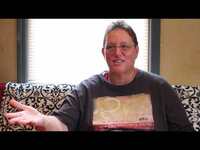 Interview with Pam Schonauer
 Pam Schonauer discussing her experiences with a women’s retreat and community space, likely associated with Herland. Pam reflects on the role of music in the group's early days, highlighting its significance during the retreats, where concerts and performances by women’s musicians created an intimate, communal atmosphere. She notes that over time, the focus on music has diminished, possibly due to changes in leadership or the group's evolution. Pam discusses the evolving dynamics of the group, mentioning the shift from being a women-only space to a more inclusive environment, where a broader range of people now attend. She also addresses conflicts that arose around issues of personal freedom and behavior, particularly concerning sexual activity, nudity, and substance use. The challenge of maintaining a safe space for everyone is a central theme, as individuals with different needs, such as those in recovery, found certain behaviors uncomfortable or triggering.
-
 Interview with Pat Reaves
 Pat Reaves discusses her involvement in the Legal Defense Fund. Pat explains how she and a group raised around $20,000 to assist Donnie in her legal battle to regain custody of her children. The money was used for legal expenses, but not for lawyer fees. Pat reflects on the significance of this effort as a key part of their legacy, noting the group's willingness to help despite limited resources.
-
 Interview with Peggy Johnson
 Peggy Johnson shares her experiences with Herland, a community center, where she contributed to physical renovations by texturing walls and tearing down a partition, alongside other volunteer work. She also served on the board in the late 1980s and early 1990s, helping with management and maintenance tasks. Peggy reflects on her journey to Oklahoma, explaining how she originally came from Georgia, was discharged from the Navy for being a lesbian, and, along with her girlfriend, ended up in Oklahoma after initially planning to go to San Francisco or New Orleans. She was drawn to Herland after seeing a flyer for a feminist bookstore and meeting the people involved. Although she had initially planned to leave, her personal circumstances led her to stay in Oklahoma, where she continued to connect with the Herland community.
-
 Interview with Sally Blevins
 Sally reflects on her long involvement with Herland, a community space that has been central to the lesbian and LGBTQ+ community in Oklahoma for over 20 years. She describes various roles she held within the organization, including serving on the board and organizing events such as retreats and open mic nights. Sally shares stories about Herland’s early days, from its humble beginnings in a small storefront to its later expansion and establishment as a welcoming place for queer folk to gather and support each other. Sally discusses how Herland was a refuge for lesbians, providing a space where people could express themselves freely, particularly in a time when being open about one’s sexual orientation was difficult. She recalls her own experience of coming out in a small town in Oklahoma, a place she describes as conservative and not accepting of 2SLGBTQ+ individuals. Herland, in contrast, was a place where people could "drop all their fake faces" and be their authentic selves, offering a sense of community that was not available in bars or other public spaces at the time. Sally also talks about the structure of Herland, which was organized around a rotating board with positions such as "first sister" and "second sister" instead of traditional titles like president or vice president. She highlights the active and vibrant nature of the community, with events like movie nights featuring lesbian-themed films and discussions around awareness during the AIDS Crisis in the early 1980s. Herland was not just a social space but also a platform for activism, as women fought for recognition and equality in a society that largely ignored or marginalized them.
-
 Interview with Susan Bishop
 Susan shares her experiences with Herland and its founding by Barbara Cleveland in the late 1970s or early 1980s, offering a perspective on the organization’s history and significance. Although Susan was never officially part of Herland, she supported the space and recalls its early days in the Gatewood neighborhood of Oklahoma City. She discusses the importance of a women-only space for lesbians and how Herland became a refuge and a safe space for queer people to come together and share their experiences, especially in a time when lesbian visibility was limited. Susan reflects on her experience in Oklahoma, moving from Rhode Island in 1972 and adjusting to a more conservative atmosphere where she often felt isolated due to a lack of LGBTQ+ acceptance. She highlights the difficulties lesbians faced in public spaces, such as bars with hidden peepholes, and contrasts that with the open, accepting environment of Herland.
-
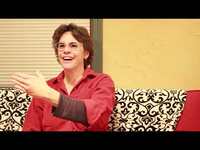 Interview with Terri Hoersch
 Terri reflects on her involvement with Herland (a women-only community space in Oklahoma City) over the span of 25 years. Although she was not deeply involved in its leadership or operations, she engaged with Herland through music-related activities and attended various events. Terri shares her initial introduction to Herland, noting how she discovered the space after moving to Oklahoma City and becoming familiar with the local lesbian community. Terri describes the early history of Herland, which started as a women's bookstore before expanding into the community center it became. She mentions the consensus-based structure of the organization, where decision-making was done collectively rather than through a typical board of directors, with positions referred to as "sisters" rather than traditional titles like president or vice president.
-
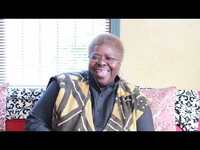 Interview with Wahru Cleveland
 In this interview Barbara Wahru Cleveland shares her personal experiences surrounding the founding of Herland, a feminist bookstore and resource center in Oklahoma City. The interview delves into her involvement in a collective effort to open the store, which began when a group of women, including Barbara, worked together to transform an old building into a community space for women’s literature, music, and activism. She recalls the challenges of getting the store started, such as negotiating with the building's owner, who was initially hesitant, and organizing work parties to renovate the space. The interview highlights the collective spirit of the project, with women contributing in various ways, including designing T-shirts, setting up book collections, and coordinating music resources. Barbara also reflects on the broader context of women's activism in the early 1980s, particularly the push for the Equal Rights Amendment (ERA) and the energy surrounding women's rights at the time. She recalls the involvement of local women’s organizations in addressing issues such as domestic violence and the lack of women in positions like police officers and doctors. Herland itself became an important center for feminist activism, hosting concerts, providing resources, and offering a space for women to organize and exchange ideas. While Barbara initially didn’t set out to run the bookstore, she ended up taking on the role, driven by the collective support and recognition of her contributions to the project. Throughout the interview, Barbara emphasizes the power of community and the importance of creating spaces that support women’s rights, empowerment, and activism.
-
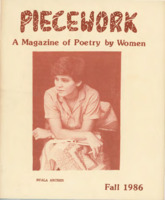 Piecework : v.1:no.1(1986)
 Piecework is a collection of poetry written by women in Oklahoma and the surrounding areas. This collection’s featured artist is Nuala Archer
-
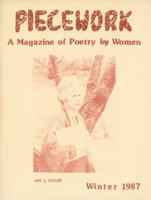 Piecework : v.1:no.2(1987)
 This edition of Piecework’s featured artist is Ann L. Zoller and they have a small biography about her as well as six featured poems of hers. Other than that the collection does not have an overarching theme. They feature female poets from Oklahoma and the surrounding areas. They also have a small collection of poems dedicated to younger readers.
-
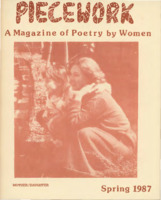 Piecework : v.1:no.3(1987)
 This edition of Piecework’s featured artist is Dahra Latham and there is a small biography about her as well as six poems written by her. There is a section highlighting another artist Bernice McDonald and about the importance of poetry especially with women. Other than that, the collection of poetry has no overarching theme and has a wide array of poets. They have a small section dedicated to poetry for young children as well.
-
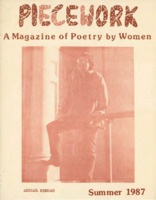 Piecework : v.1:no.4(1987)
 This edition of Piecework’s featured artist is Abigail Keegan and there is a small biography about her and seven poems written by her. Other than that there isn’t an overarching theme to the poems. They’re all written by women and most of the poets are from Oklahoma. Some are from the surrounding areas. They also showcase the younger poets including high school students and recent graduates from Oklahoma.
-
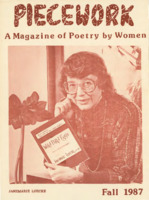 Piecework : v.2:no.1(1987)
 This edition of poetry highlights local female poets in Oklahoma and the surrounding areas. They start off with a call for submissions for a poetry contest for students aged 14-18 and another contest for adult women 18+. They also celebrated their first year as a press company. Janemarie Luecke is the featured artist for this volume and they have a small biography about her as well as featuring four of her poems. The rest of the magazine is a wide range of poems about many different topics and a small section of poems for young children.
-
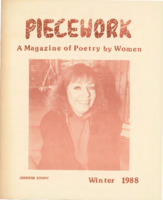 Piecework : v.2:no.2(1988)
 This edition of Piecework has a dedication to Janemarie Luecke, a poet who recently passed away. They also have a featured artist, Jennifer Kidney, and have a small biography about her and showcase five poems written by her. Other than that the collection does not have an overarching theme. Each poem is different, but all written by women, typically from Oklahoma or the surrounding states. They also have a section of poems written for younger readers.
-
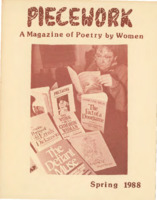 Piecework : v.2:no.3(1988)
 This edition of Piecework is showcasing the First place, Second place, and Runner-Ups in their poetry competition. They had two separate categories for adult women and students and showcased their submissions. Outside of that the magazine has no overarching theme other than the fact that the poets are all women from Oklahoma and the surrounding areas.
-
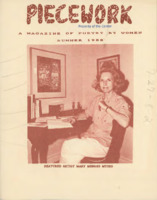 Piecework : v.2:no.4(1988)
 Piecework is a magazine that highlights female poets in Oklahoma and the surrounding areas. This edition's featured artist is Mary Menges Myers and they have nine poems written by her. Other than that there is not one overarching theme to these poems other than where the poets are writing from. They have a section dedicated to poetry for small children as well.
-
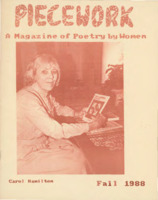 Piecework : v.3:no.1(1988)
 This volume of Piecework highlights a poetry contest they are having. Carol Hamilton is the featured poet and there is a small biography about her and six poems by her. The rest of Piecework is a collection of poetry written by female poets in Oklahoma and the surrounding area. There isn’t an overarching theme for the poems, however, there are quite a few about autumn and experiencing autumn in Oklahoma. They also have a section of poems dedicated to younger readers.
-
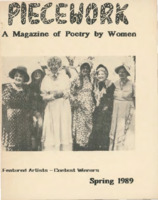 Piecework : v.3:no.2(1989)
 This edition of Piecework features the winners of their poetry contest. They feature the First and Second place winners as well as a list of honorable mentions. They had two categories for adult women and young women aging from 14-18. Other than that, the collection has no overarching theme, the poets are all women from Oklahoma or the surrounding areas. They have a few categories like celebrating spring, celebrating Oklahoma, and celebrating life as a woman. They also have a section for younger readers.
-
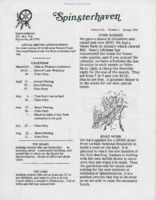 Spinsterhaven : v.7:no.1(1996:Spring)
 This issue details different fundraisers Spinsterhaven has had and the announcement of a $5000 grant to build a road on Spinster haven’s land from Lesbian Natural Resources. This article also gives readers updates about a staff member taking time off due to health reasons and a new board member being added. There is a brief “In Memorium” section about Mary Grace and Ann Gallmeyer passing, both of whom were very influential to Spinsterhaven. There are also articles detailing future events the organization hosted and a letter from the Vice President declaring a need for a federation non-profit women’s groups in Arkansas.