Creating an Archive
Herland Sister Resources was never simply a bookstore. From its beginnings in the early 1980s, Herland served as a gathering place, lending library, cultural center, activist organization, and refuge for lesbian and feminist women in Oklahoma. Through books, music, retreats, workshops, consciousness-raising sessions, demonstrations, and legal advocacy, its members created spaces where women could share knowledge, develop political awareness, and build relationships outside institutions that often excluded or marginalized them.
Herland’s history also demonstrates how community-building and activism sustained one another. The trust and solidarity developed through social and cultural programs gave members the networks necessary to respond collectively to discrimination, violence, and legal inequality. At the same time, Herland’s participation in public protests and advocacy connected the experiences of women in Oklahoma to broader feminist and LGBTQ+ movements across the United States. Although its members did not always agree about leadership, separatism, or the organization’s direction, they remained committed to maintaining a space shaped by feminist principles and collective responsibility.
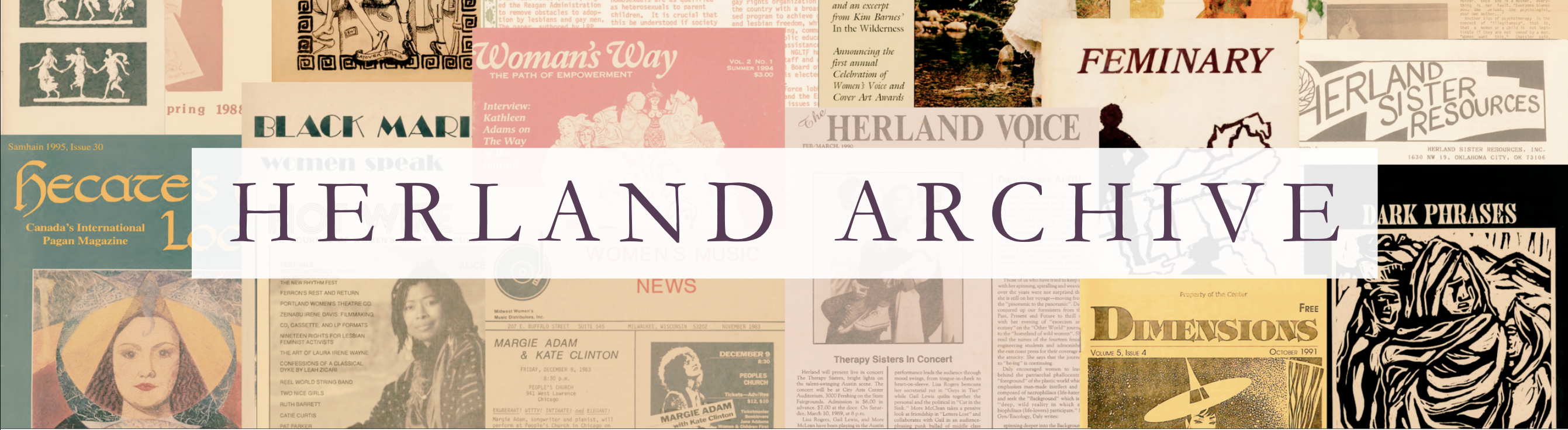
In 2016, Herland Sister Resources donated its collection to the University of Central Oklahoma, creating the Herland Archive. The materials preserved there—including newsletters, periodicals, organizational records, photographs, and oral histories—document both Herland’s institutional history and the lives of the people who sustained it. They reveal the labor required to build community: renovating buildings, organizing events, raising money, preserving publications, supporting individuals in crisis, and continually negotiating what it meant to create a safe and inclusive space.
Herland’s legacy therefore resides not only in the organization itself, but also in the relationships, resources, and historical record it created. By preserving these materials, the Herland Archive ensures that the experiences of lesbian and feminist women in Oklahoma remain visible and accessible. This history reminds us that movements are sustained not only through public demonstrations or prominent leaders, but also through the everyday work of creating places where people can gather, learn, organize, and celebrate one another.