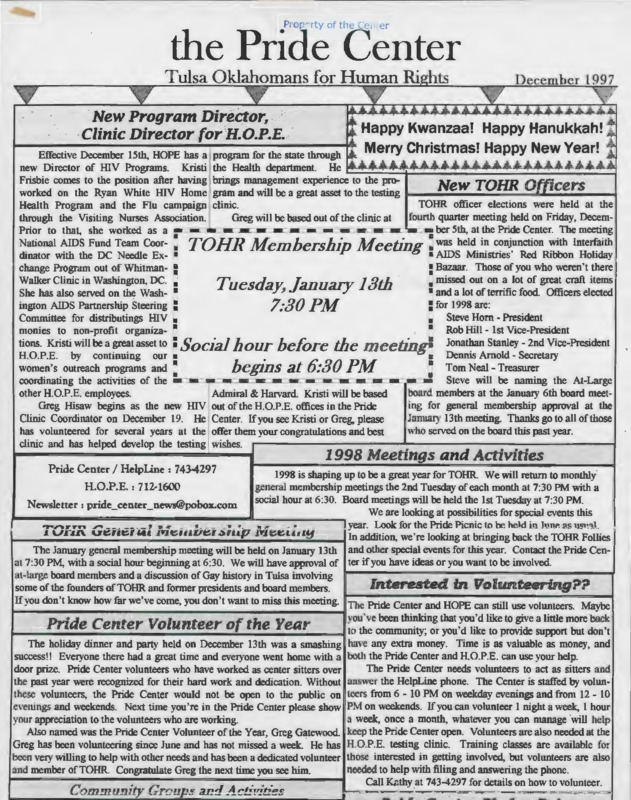
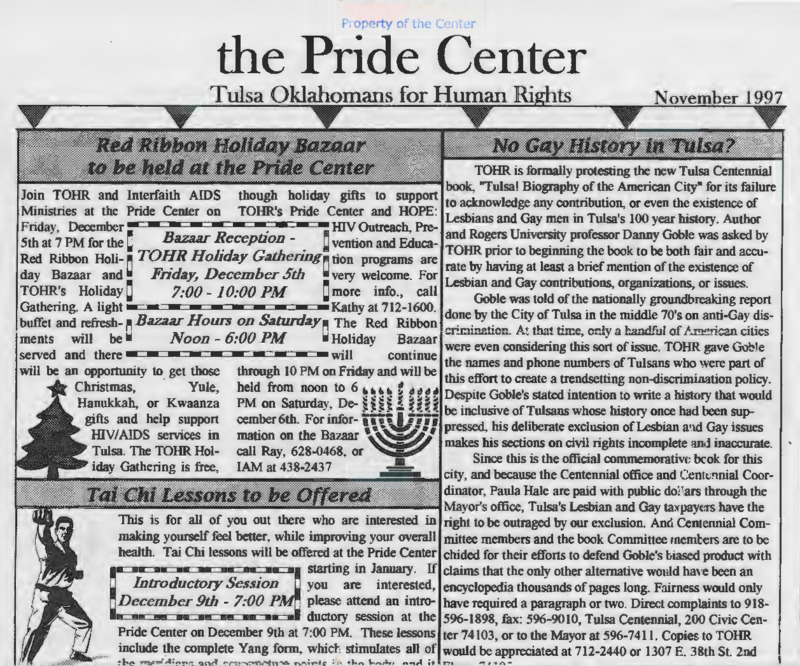
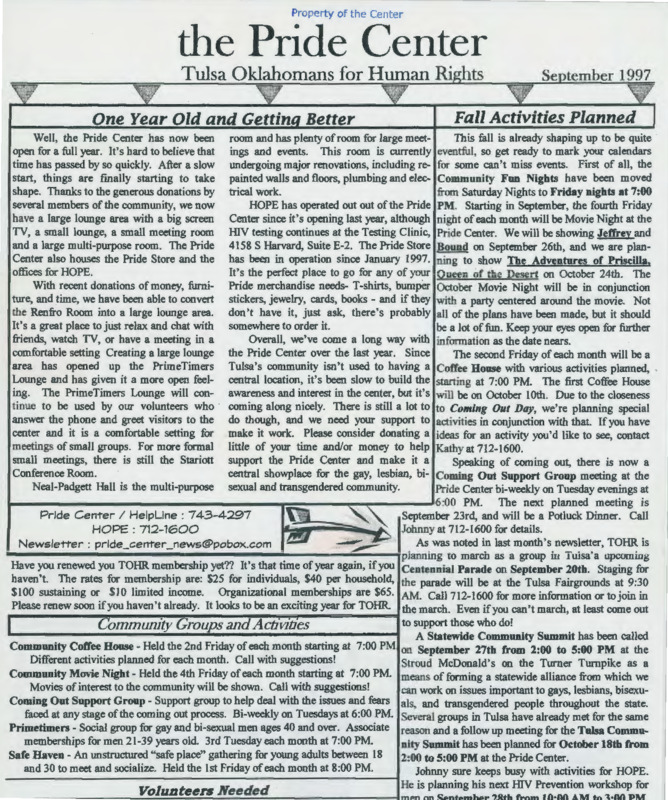
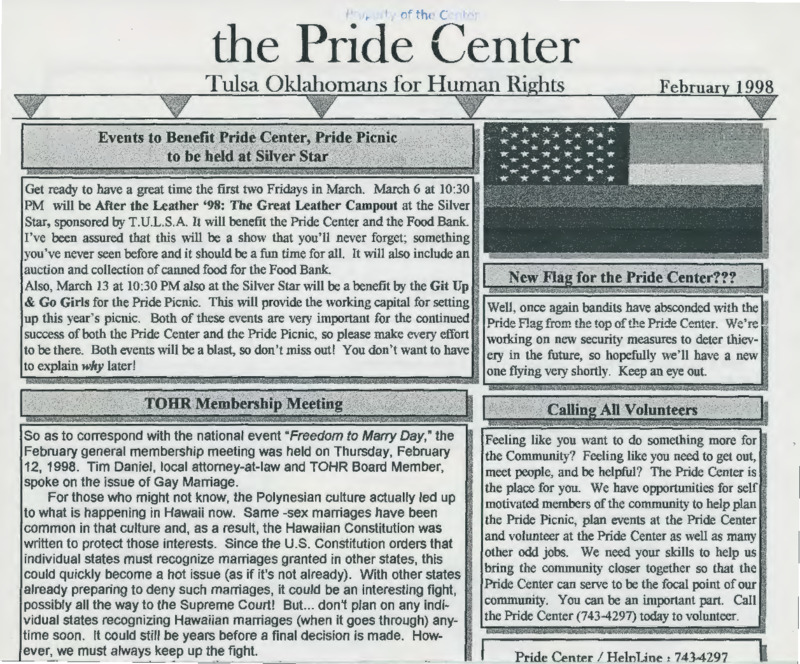
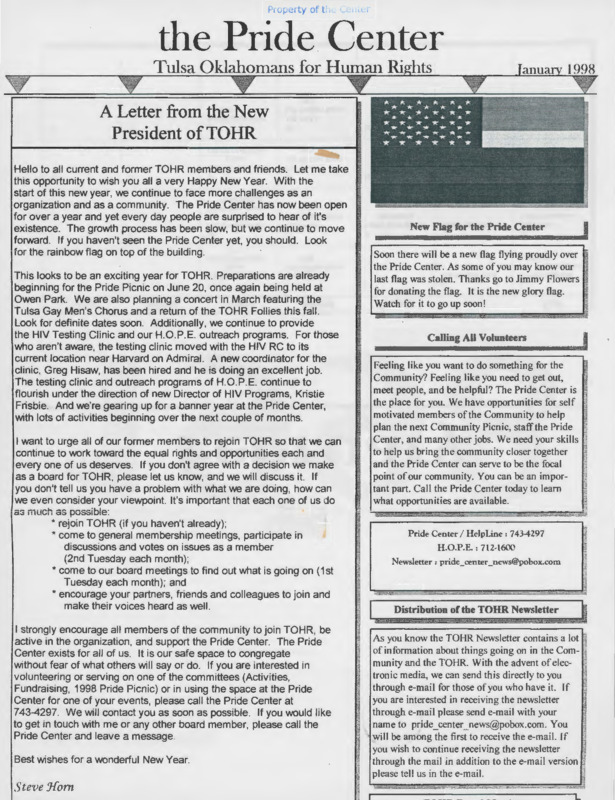
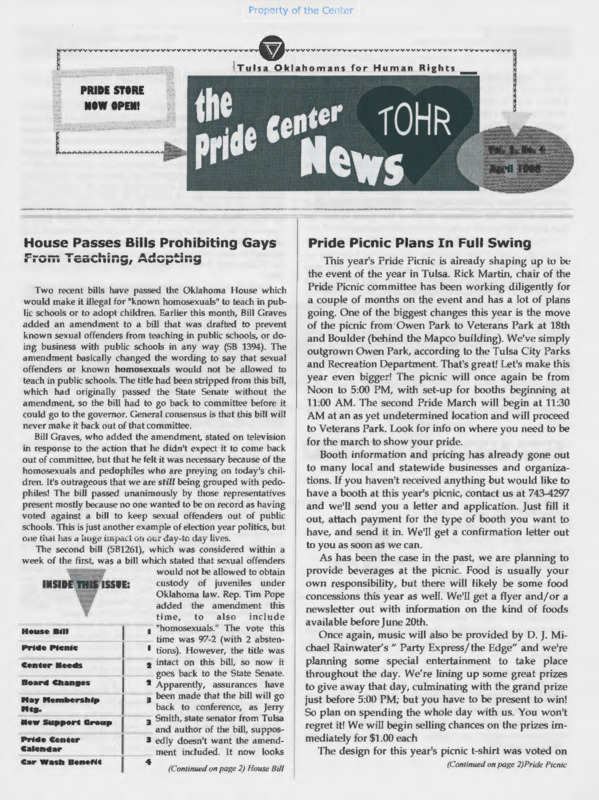
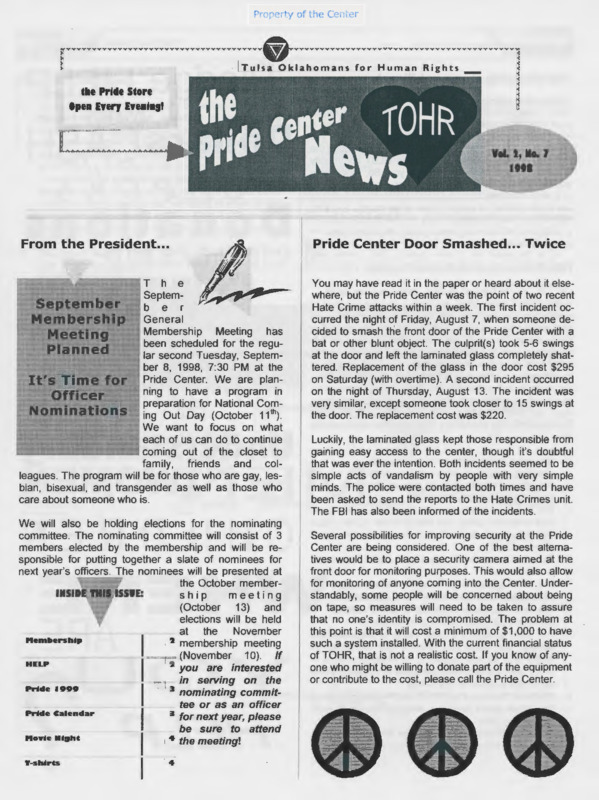
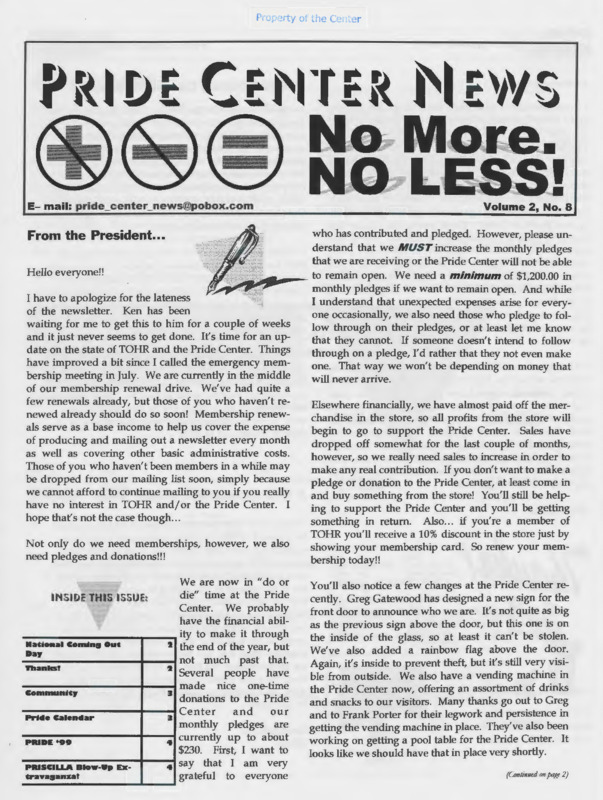
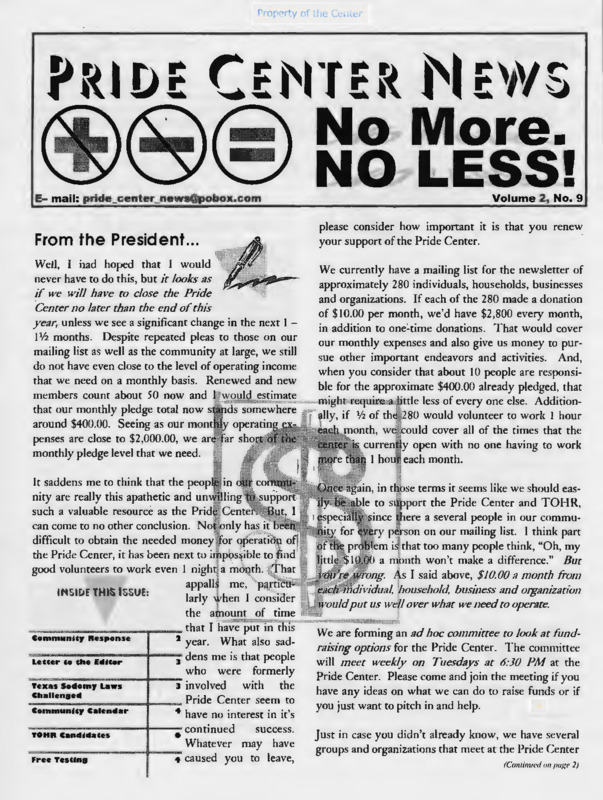
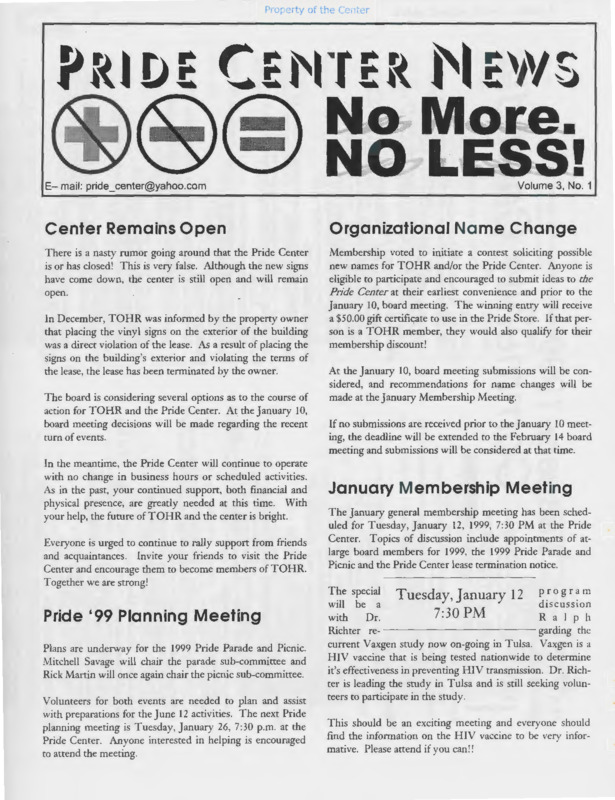
Newsletter by Tulsa Oklahomans for Human Rights (TOHR) focused on Oklahoma�s first LGBT Community Center, H.O.P.E. (Health Outreach, Prevention & Education), and human rights and equality for lesbian, gay, bisexual and transgender (LGBT) individuals.
Newsletter by Tulsa Oklahomans for Human Rights (TOHR) focused on Oklahoma�s first LGBT Community Center, H.O.P.E. (Health Outreach, Prevention & Education), and human rights and equality for lesbian, gay, bisexual and transgender (LGBT) individuals.
Newsletter by Tulsa Oklahomans for Human Rights (TOHR) focused on Oklahoma�s first LGBT Community Center, H.O.P.E. (Health Outreach, Prevention & Education), and human rights and equality for lesbian, gay, bisexual and transgender (LGBT) individuals.
Newsletter by Tulsa Oklahomans for Human Rights (TOHR) focused on Oklahoma�s first LGBT Community Center, H.O.P.E. (Health Outreach, Prevention & Education), and human rights and equality for lesbian, gay, bisexual and transgender (LGBT) individuals.
Newsletter by Tulsa Oklahomans for Human Rights (TOHR) focused on Oklahoma�s first LGBT Community Center, H.O.P.E. (Health Outreach, Prevention & Education), and human rights and equality for lesbian, gay, bisexual and transgender (LGBT) individuals.
CONTENT WARNING FOR RAPE/SA. Newsletter by Tulsa Oklahomans for Human Rights (TOHR) focused on Oklahoma�s first LGBT Community Center, H.O.P.E. (Health Outreach, Prevention & Education), and human rights and equality for lesbian, gay, bisexual and transgender (LGBT) individuals.
Newsletter by Tulsa Oklahomans for Human Rights (TOHR) focused on Oklahoma�s first LGBT Community Center, H.O.P.E. (Health Outreach, Prevention & Education), and human rights and equality for lesbian, gay, bisexual and transgender (LGBT) individuals.
Newsletter by Tulsa Oklahomans for Human Rights (TOHR) focused on Oklahoma�s first LGBT Community Center, H.O.P.E. (Health Outreach, Prevention & Education), and human rights and equality for lesbian, gay, bisexual and transgender (LGBT) individuals.
Newsletter by Tulsa Oklahomans for Human Rights (TOHR) focused on Oklahoma�s first LGBT Community Center, H.O.P.E. (Health Outreach, Prevention & Education), and human rights and equality for lesbian, gay, bisexual and transgender (LGBT) individuals.
Newsletter by Tulsa Oklahomans for Human Rights (TOHR) focused on Oklahoma�s first LGBT Community Center, H.O.P.E. (Health Outreach, Prevention & Education), and human rights and equality for lesbian, gay, bisexual and transgender (LGBT) individuals.
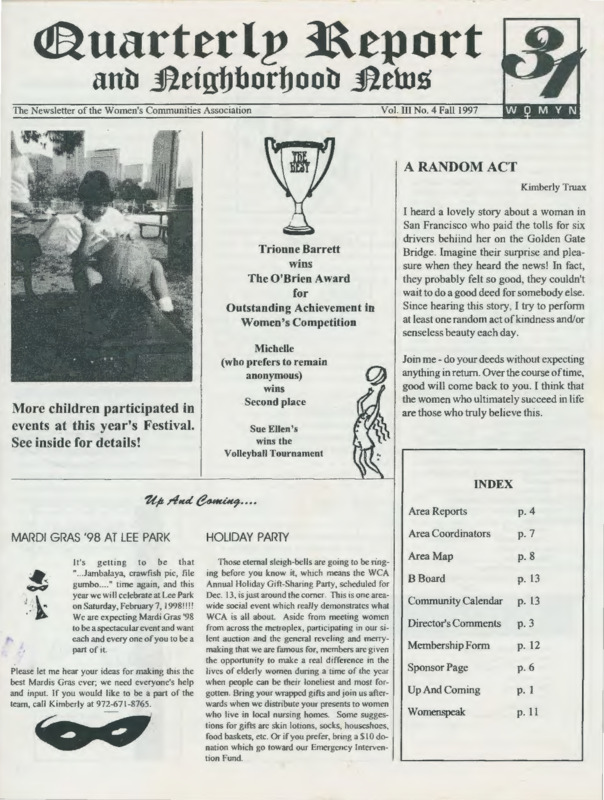
The Fall 1997 issue of the Quarterly Report and Neighborhood News by the Women's Communities Association (WCA) showcases their vibrant community-building efforts across North Texas. The newsletter celebrates the success of the Women's Festival, which featured competitions, vendor booths, and entertainment despite challenges like rain. It announces upcoming events, including Mardi Gras '98 at Lee Park and the Annual Holiday Gift-Sharing Party, which supports elderly women in nursing homes. The issue highlights local efforts to foster community engagement, including area meetings, outreach programs, and initiatives like the WCA 2000 by 2000 membership goal. Articles emphasize the organization's focus on inclusivity, volunteerism, and grassroots activism, with reflections on the impact of collective efforts on women's lives.
The Fall 1998 issue of the Quarterly Report and Neighborhood News by the Women's Communities Association (WCA) highlights the organization's grassroots efforts to support women in North Central Texas. It reflects on the success of the first Avalon Solstice Festival, a women-focused medieval-themed fundraiser for WCA and the Walt Whitman Community School, featuring music, artisan vendors, and a solstice ritual. Updates include preparations for the third annual WCA Women's Festival and details on the Neighborhood Development Program, which fosters localized support networks for women. The issue also emphasizes the importance of voting and advocacy, featuring a Herstory Quiz and calls to action for community involvement. WCA continues to prioritize inclusivity, volunteerism, and addressing the unique needs of older women, women living alone, and lesbians.
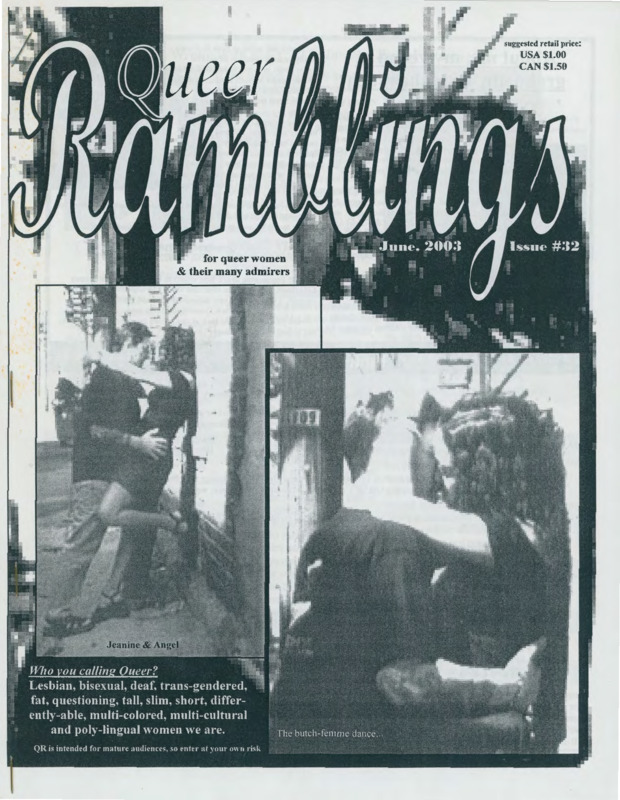
The majority of this magazine features a short story about a lesbian relationship between a college graduate and a higher ranking drug dealer. Their relationship had many ups and downs as they both navigated the relationship. There are many comic strips from a queer artist called “Out There” about domestic aspects to their relationship. There are a few poems and short stories about lesbians. The magazine also features many different images of WLW relationships, either reader submitted or of celebrities.
In this issue of Radically Pink, the first major article on the initial page makes please for more activity from their readers. This is especially true regarding using more resources to reverse the growing numbers of death from the HIV-AIDS pandemic to the reversal of the ban of gay marriage, and rights for those seeking to immigrate to the United States. Political and social reform articles on the issues of sodomy law and the legalization of marijuana. Article on what AIDS is, though this is not in the scientific sense of the definition, but how it affects loved ones, what it means as far as hospital visits, life changes etc. Article on the shortcomings of Kristine Gebbie and how she has not helped in promoting AIDS research, etc.
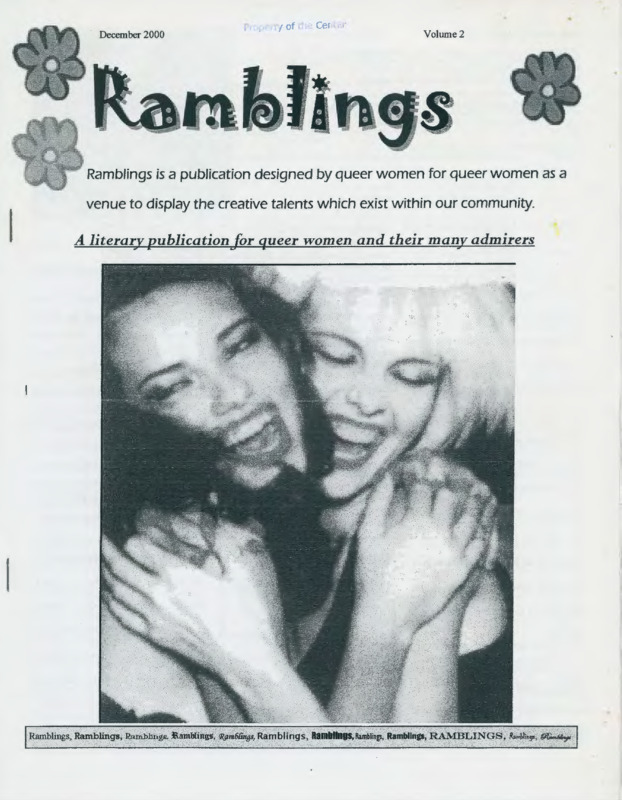
In this issue of Ramblings, the first major article examines a two-page story of a woman’s life and her embracing and experience of the complexities of the human condition. The rest of the newsletter are long entries of various kinds of poetry. Poem titled “Reason to Dream” by Natasha. Alicia Amberg has a letter written to her parents explaining a discussion group she went to for bisexual women and explains the various struggles that each woman is going through. Another poem written by Berta D titled “Choices.” Another poem titled “Love Like Water” by Suo Mynona. Additional poem titled “Red Nail polish.”
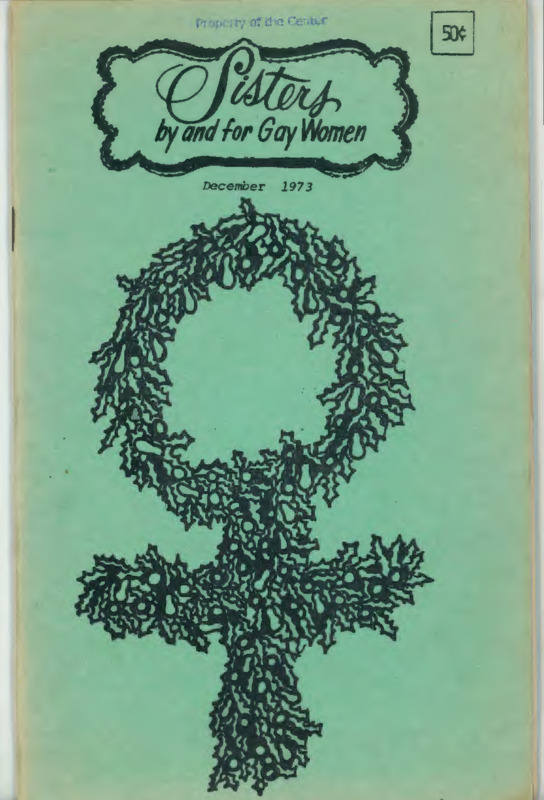
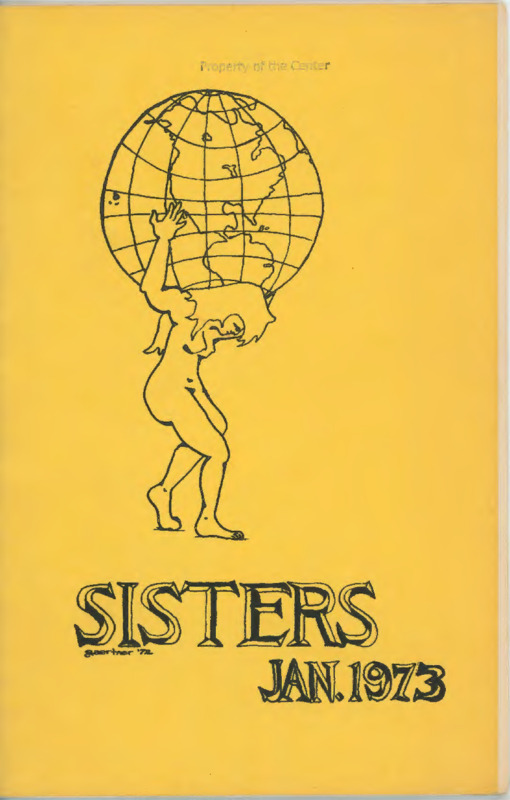
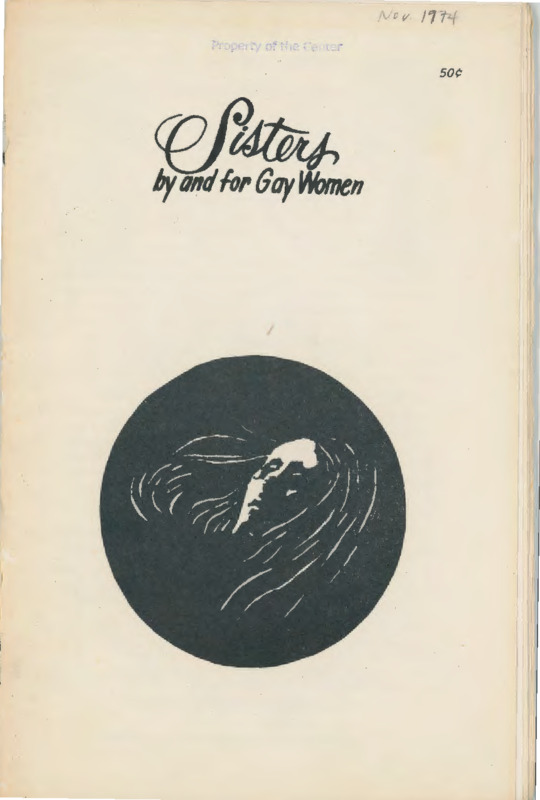
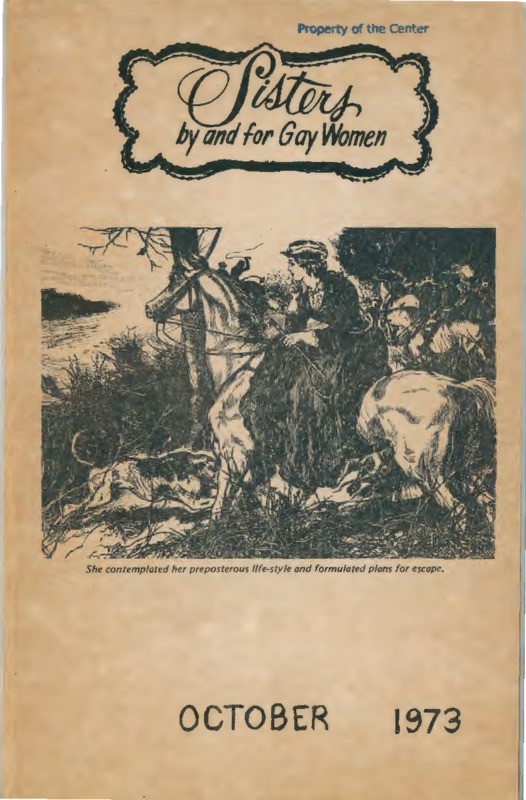
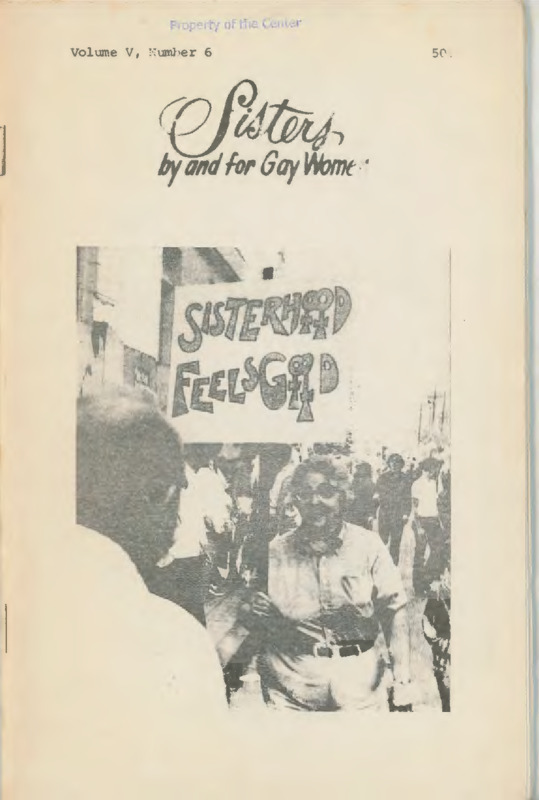
Sisters was "a magazine by and for gay women" published by the San Francisco chapter of the Daughters of Bilitis (DOB). It contained original art, poetry, articles, news, and photography and served as an alternative to DOB's main publication, The Ladder.
Sisters was "a magazine by and for gay women" published by the San Francisco chapter of the Daughters of Bilitis (DOB). It contained original art, poetry, articles, news, and photography and served as an alternative to DOB's main publication, The Ladder.
Sisters was "a magazine by and for gay women" published by the San Francisco chapter of the Daughters of Bilitis (DOB). It contained original art, poetry, articles, news, and photography and served as an alternative to DOB's main publication, The Ladder.
Sisters was "a magazine by and for gay women" published by the San Francisco chapter of the Daughters of Bilitis (DOB). It contained original art, poetry, articles, news, and photography and served as an alternative to DOB's main publication, The Ladder.
Sisters was "a magazine by and for gay women" published by the San Francisco chapter of the Daughters of Bilitis (DOB). It contained original art, poetry, articles, news, and photography and served as an alternative to DOB's main publication, The Ladder.
Sisters was "a magazine by and for gay women" published by the San Francisco chapter of the Daughters of Bilitis (DOB). It contained original art, poetry, articles, news, and photography and served as an alternative to DOB's main publication, The Ladder.
Sisters was "a magazine by and for gay women" published by the San Francisco chapter of the Daughters of Bilitis (DOB). It contained original art, poetry, articles, news, and photography and served as an alternative to DOB's main publication, The Ladder.
Sisters was "a magazine by and for gay women" published by the San Francisco chapter of the Daughters of Bilitis (DOB). It contained original art, poetry, articles, news, and photography and served as an alternative to DOB's main publication, The Ladder.
Sparks is "a forum for the creative and intellectual expression of women." This issue includes a community calendar of various events; fiction, nonfiction, and poetry contributions; a national news section; and web resources for the curious reader.
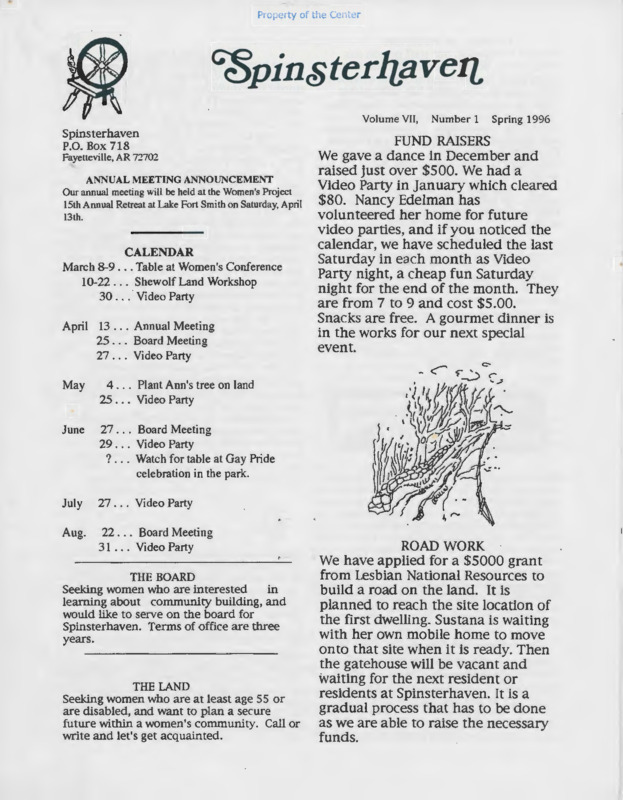
This issue details different fundraisers Spinsterhaven has had and the announcement of a $5000 grant to build a road on Spinster haven’s land from Lesbian Natural Resources. This article also gives readers updates about a staff member taking time off due to health reasons and a new board member being added. There is a brief “In Memorium” section about Mary Grace and Ann Gallmeyer passing, both of whom were very influential to Spinsterhaven. There are also articles detailing future events the organization hosted and a letter from the Vice President declaring a need for a federation non-profit women’s groups in Arkansas.
This newsletter discusses how Spinsterhaven is a refugee for many women that were left out of society for various reasons. It also covers the history of Spinsterhaven, and it was created. This article details how Spinsterhaven was able to get money to expand their property and build a road for better access. This newsletter has an article that discusses Disability Awareness. Another article emphasizes spiritual peace and coming to terms with death through Education, Preparation, and Affirmations. Other primary topics in this edition include astrology and its relation to patriarchy. It even includes an astrological chart which was done for Spinsterhaven that equates Spinsterhaven as a private, personal, and spiritual place.
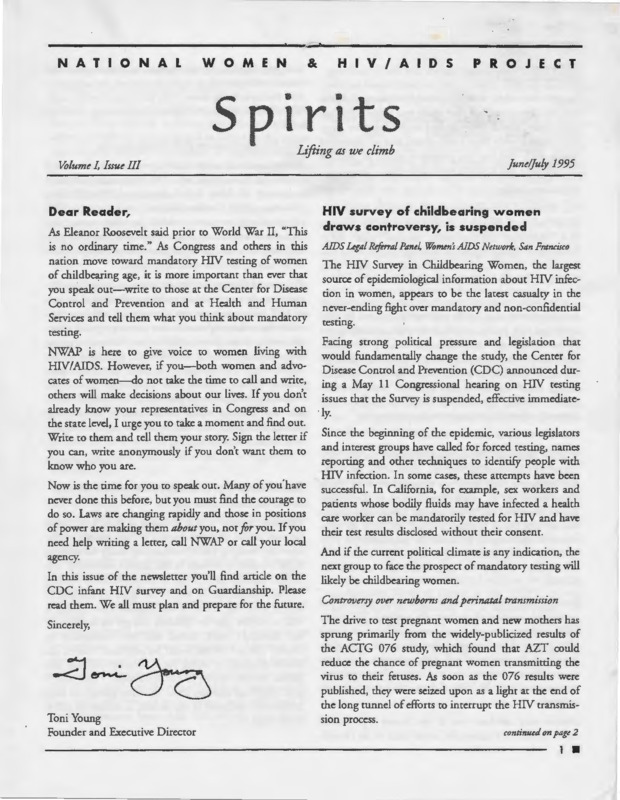
The June/July 1995 issue of the National Women & HIV/AIDS Project Newsletter addresses topics such as the prospect of mandatory HIV testing of women of childbearing age, women and Social Security, legal services for children, updates from the National Institute of Allergy and Infectious Diseases, holistic treatment and information about HIV/AIDS, and relevant conferences, events, and studies.
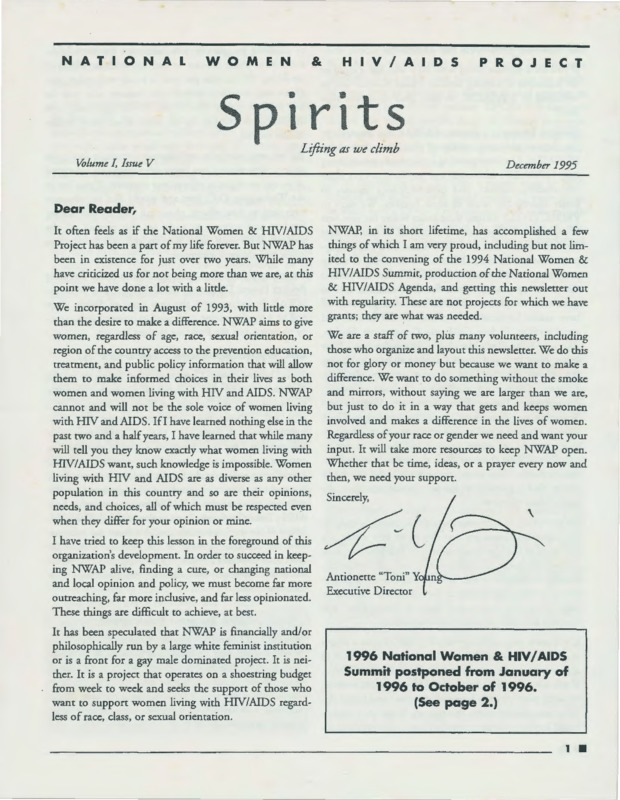
The December 1995 issue of the National Women & HIV/AIDS Project Newsletter addresses the diverse needs of women living with HIV/AIDS, emphasizing inclusivity and grassroots efforts. It reflects on accomplishments like the 1994 National Women & HIV/AIDS Summit and the creation of the National Women & HIV/AIDS Agenda. Features include updates on the "Building Bridges" project, which assists mothers with HIV/AIDS in planning stable guardianship for their children, and highlights the CDC's cryptosporidiosis "voice-fax" information line. Articles advocate for legislative support for HIV-related issues, such as the Ryan White CARE Act reauthorization and programs to enhance access to combination antiretroviral therapies. The newsletter underscores the importance of empowering women through education, healthcare access, and policy change, while inviting contributions from the community.
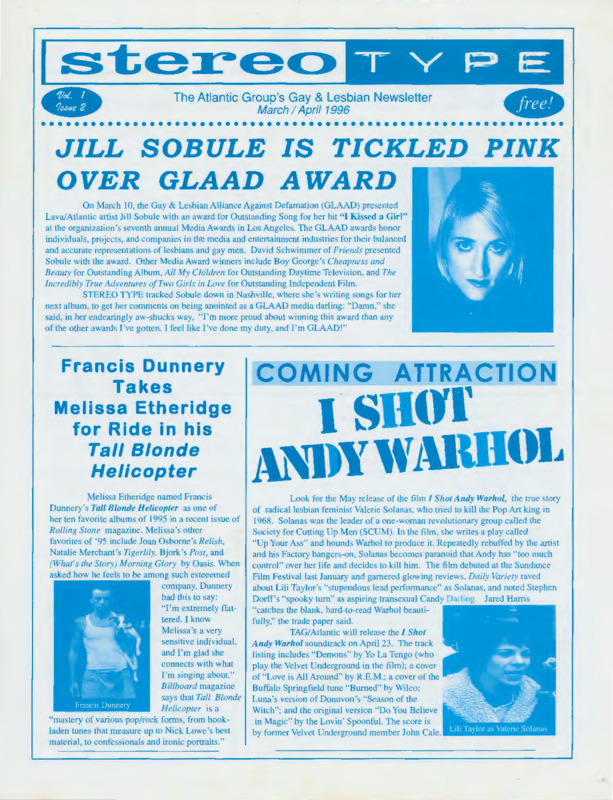
This is the March/April 1996 issue of "StereoType," a newsletter from The Atlantic Group that focuses on gay and lesbian-related cultural events and media. It highlights notable achievements such as Jill Sobule's GLAAD Media Award for her song "I Kissed a Girl" and Melissa Etheridge's praise for Francis Dunnery's album. It reviews upcoming films like I Shot Andy Warhol, which centers on Valerie Solanas. The newsletter features interviews with prominent figures like Michael Feinstein discussing his experiences as a gay artist, Randy Crawford addressing her music's diverse fan base, and Fred Hersch reflecting on Billy Strayhorn's legacy and AIDS activism. It also promotes Atlantic Records' artists, including 7 Year Bitch, Bel Canto, and Extra Fancy, while mentioning benefit projects such as Home Alive's self-defense initiative. The content emphasizes inclusivity, artistic recognition, and community empowerment.