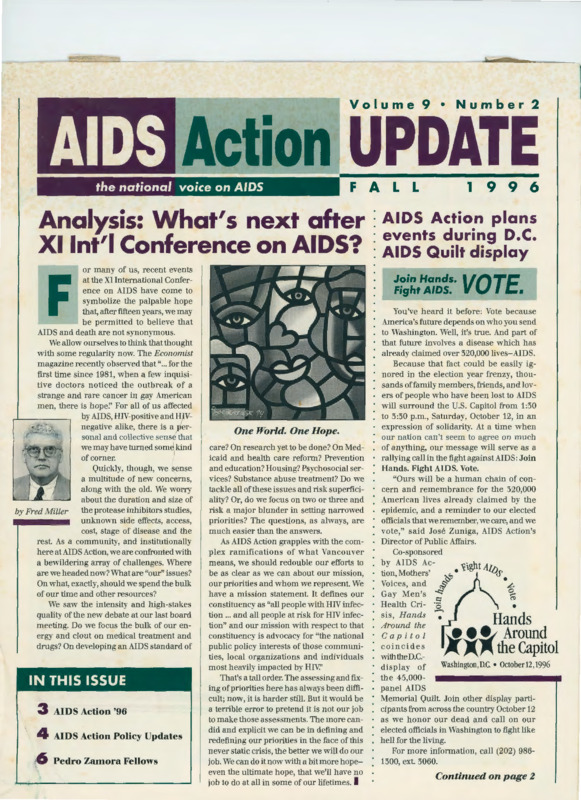
This issue of the AIDS Action Update covers the 11th International Conference on AIDS. The Washington D.C. AIDS quilt display is examined in detail. A brief mention is given to the National Native American AIDS Prevention Center. Further examination is given to various AIDS action conventions for the year 1996. One page is devoted to policy updates in the following fields: military, housing, FDA, welfare, prevention, health insurance. One page is examining the AIDS epidemic within the Latino community. A profile of Pedro Zamora is given. The newsletter concludes with AIDS in Orange County California, and community organizations in Houston, Texas.
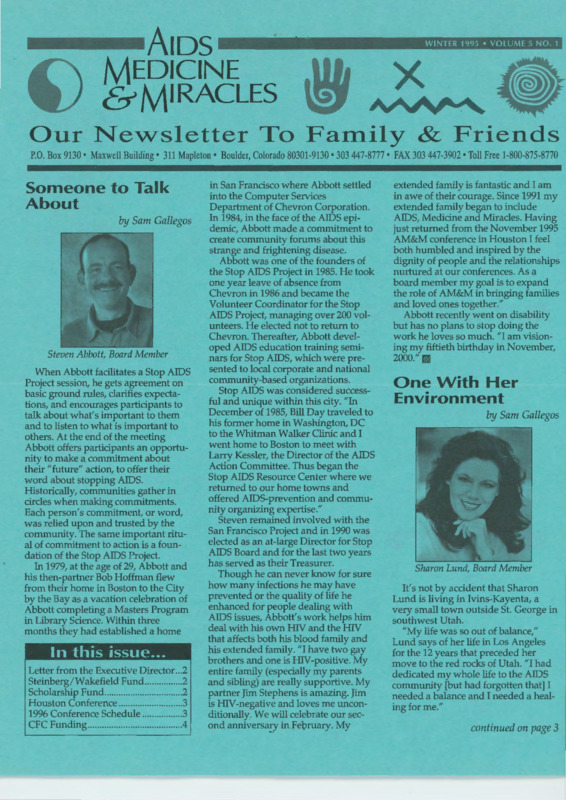
This issue of AIDS Medicine & Miracles discusses the achievements of Steven Abbott, founder of the Stop AIDS Project. Sam Gallegos is also featured in an article that discusses her activism in the fight against AIDS. Also mentioned is the new director of AIDS Medicine & Miracle, a scholarship fund for HIV+ individuals, and a fund for travel and accommodation assistance.
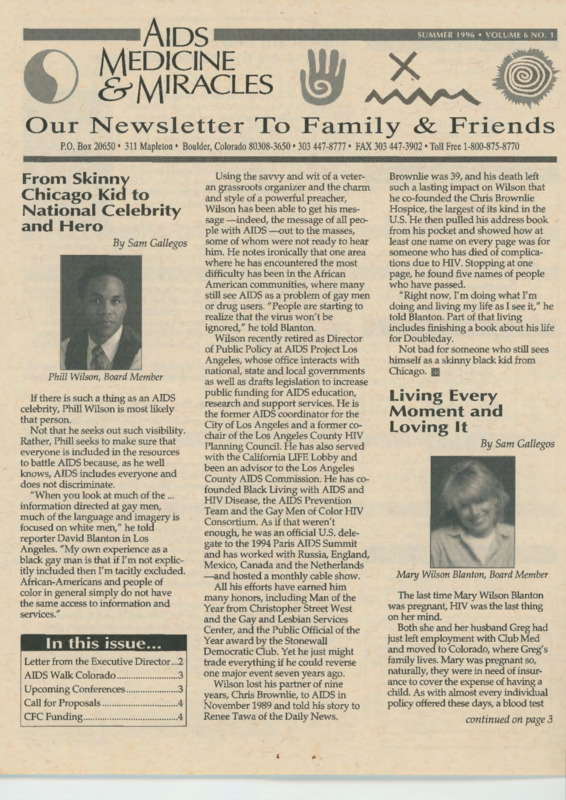
This issue of AIDS Medicine & Miracles features Phil Wilson, a Board Member of the non-profit, and discusses his contributions to the HIV/AIDS community as a black, gay man. Mary Wilson Blanton is also featured, detailing her story of losing a child to AIDS. Also discussed is the success of an initiative to provide subsidized tuition to conferences and the success of the conferences hosted by the non-profit organization.
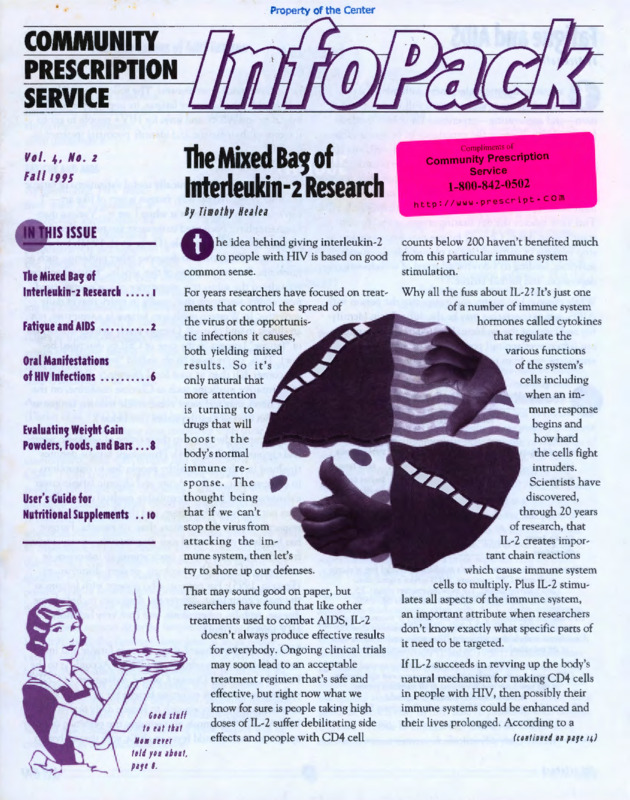
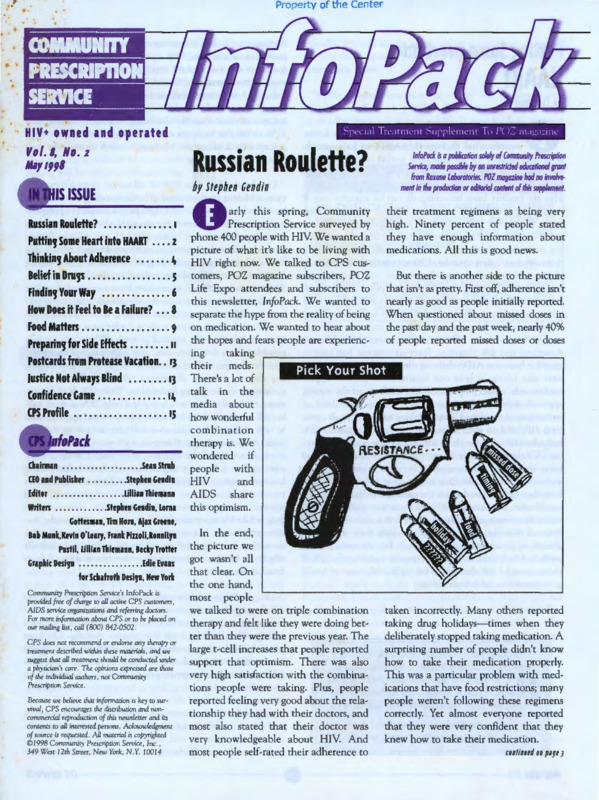
Community Prescription Service (Infopack) is a Journal that provides medical and scientific information on the symptoms and treatments of HIV and AIDS. Some articles included discuss fatigue, AZT alternatives, healthy eating, and more resource packs for HIV and AIDS information.
Community Prescription Service (Infopack) is a Journal that provides medical and scientific information on the symptoms and treatments of HIV and AIDS. Some articles discussed HAART and Community Prescription Profiles.
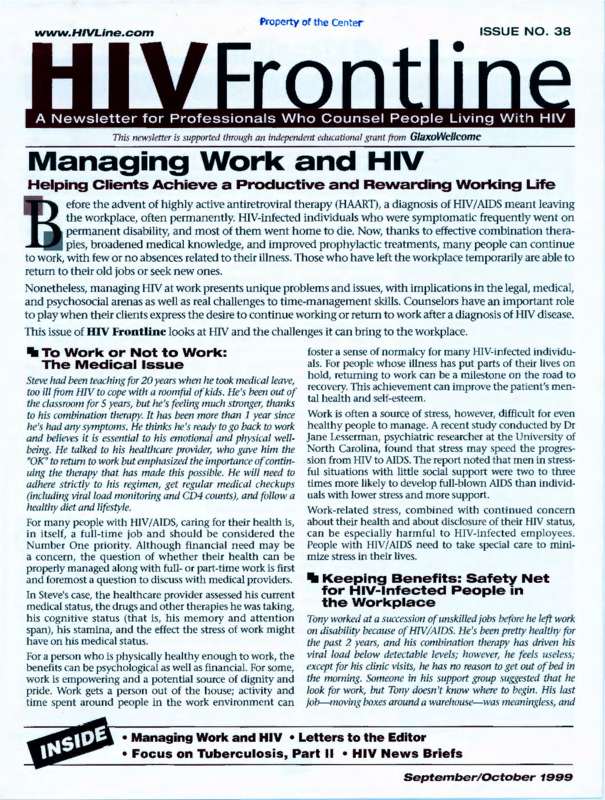
HIV Frontline is "a newsletter for professionals who counsel people living with HIV." The September-October 1999 issue focuses on challenges and opportunities for individuals with HIV in the workplace. It explores legal protections under the Americans with Disabilities Act (ADA), the psychosocial benefits of returning to work, and strategies for navigating workplace discrimination and accommodations. The issue emphasizes the importance of balancing work with health management, including strict adherence to ART and regular medical appointments. It also discusses vocational training programs, the role of counselors in managing disclosure fears, and accessing government benefits like SSDI and PASS. Additionally, the issue highlights the intersection of tuberculosis and HIV, covering diagnosis, prophylaxis, and treatment challenges.
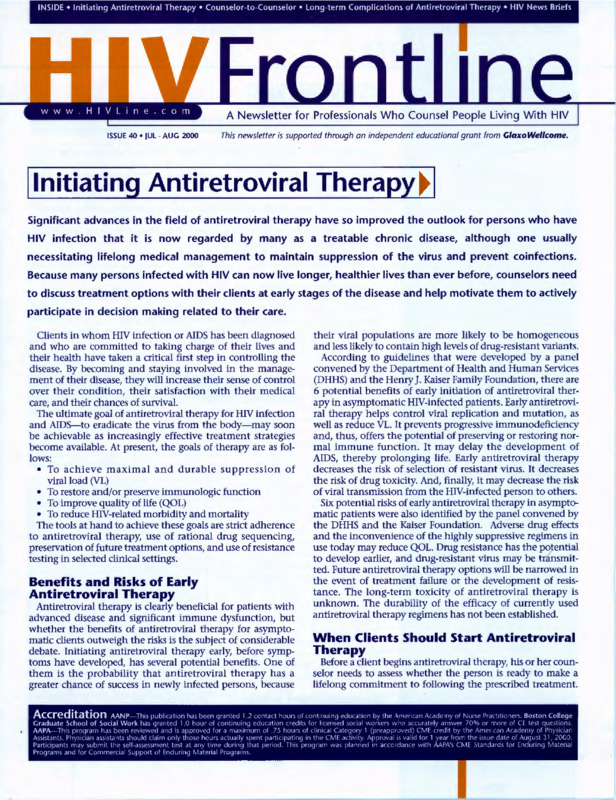
HIV Frontline is "a newsletter for professionals who counsel people living with HIV." The July-August 2000 issue delves into the complexities of initiating and managing antiretroviral therapy (ART) for people living with HIV. It explores the benefits and risks of early treatment, emphasizing the need for patient readiness and strict adherence to ensure long-term success. Key topics include strategies for minimizing resistance, addressing adherence barriers, and customizing treatment plans based on individual needs. The issue also reviews new ART regimens and highlights their advantages and challenges. Additionally, it covers complications associated with long-term ART, such as mitochondrial toxicity, lipodystrophy, and hepatotoxicity. The publication stresses the critical role of counselors in supporting clients through education, adherence strategies, and holistic care.
HIV Frontline is "a newsletter for professionals who counsel people living with HIV." The February 1999 issue examines the intersection of HIV and addiction, with a focus on addressing the unique challenges faced by injection drug users (IDUs). It highlights the prevalence of co-occurring psychiatric disorders, medical complications such as hepatitis and tuberculosis, and barriers to accessing care. The issue explores models of care, including harm reduction and abstinence-based approaches, emphasizing the importance of compassionate and individualized treatment plans. It also discusses the impact of addiction on adherence to antiretroviral therapy (ART) and strategies to optimize treatment. The publication includes a detailed focus on hepatitis types A, B, and C, addressing their transmission, prevention, and treatment within the context of HIV care.
HIV Frontline is "a newsletter for professionals who counsel people living with HIV." The Spring 1998 issue explores advancements and challenges in HIV treatment. Key topics include emerging antiretroviral therapies (ART), the evolving standard for viral load detection, and updates on investigational drugs like abacavir and efavirenz. It discusses strategies to maximize treatment effectiveness while minimizing toxicity and resistance. The issue also addresses HIV wasting syndrome, its causes, and multifaceted treatment options, including nutritional support, hormone therapy, and mental health interventions. Public health policy debates are highlighted, such as mandatory HIV reporting and needle exchange programs, emphasizing their impact on prevention and care. Overall, the publication provides a comprehensive overview of medical, psychosocial, and policy issues shaping HIV treatment.
HIV Frontline is "a newsletter for professionals who counsel people living with HIV." The Winter 1998 issue discusses the integration of complementary therapies with conventional HIV treatments, emphasizing open communication between clients, counselors, and healthcare providers. It explores various nontraditional approaches, including herbal medicine, acupuncture, massage, and dietary supplements, while warning against fraudulent or harmful practices. The issue also highlights the prevalence, causes, and treatment of candidiasis, a common HIV-related fungal infection. Other updates include trends in AIDS mortality, partner notification policies, and the impact of antiretroviral therapy on conditions like progressive multifocal leukoencephalopathy. The issue stresses a balanced approach to therapy, combining the benefits of complementary methods with proven medical treatments to enhance quality of life for individuals with HIV.
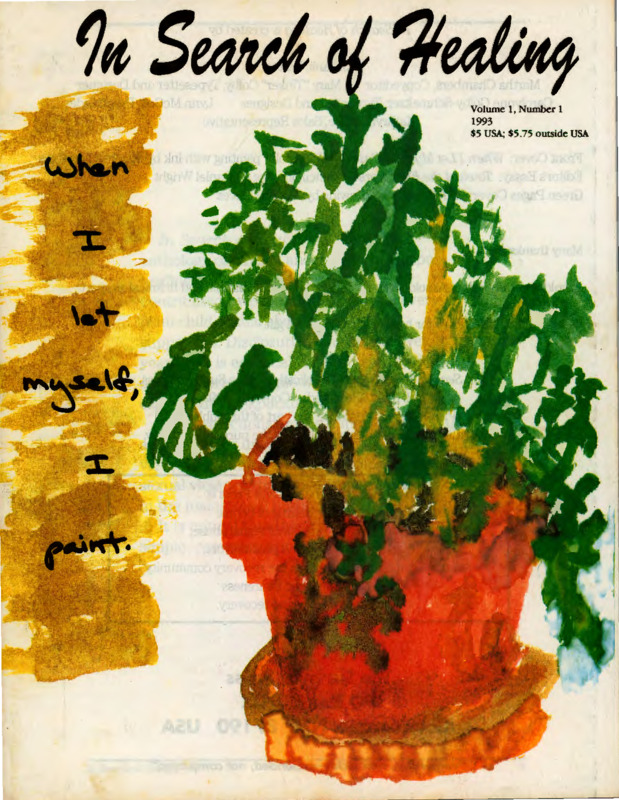
The great bulk of In Search of Healing is poetry written by the survivors of various kinds of sexual abuse from adolescence to adulthood. There are also artistic expressions of how the survivors felt and still feel. There is an abundance of resources that are manifold throughout the newsletter that include therapy and other resources for survivors to begin and continue the healing process.
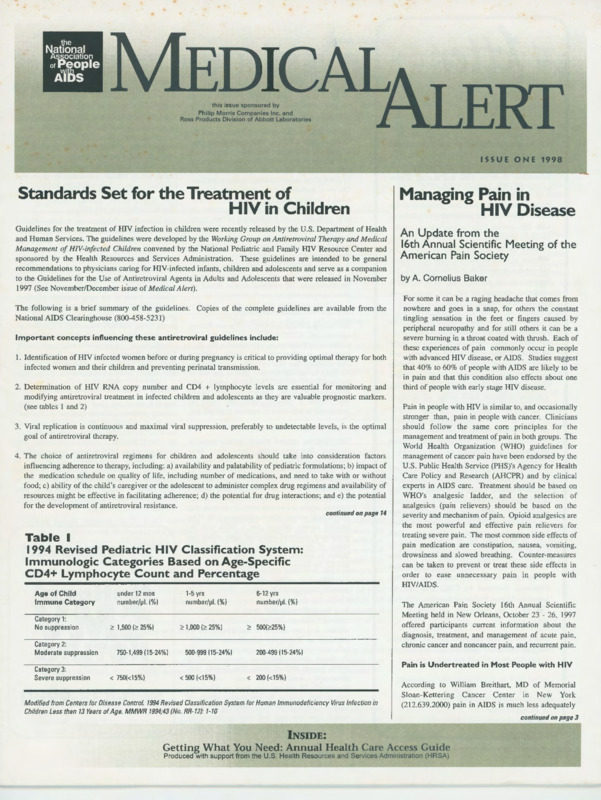
In this issue of Medical Alert, the first major articles focuses on HIV treatment in children and HIV pain management. There is considerable information on the statistics of opioid use. There is a full page on patients and their use of Viracept, including its side effects, usage, etc. Full page on the annual care access guide. Multiple pages of resources. Article on Fortovase use.
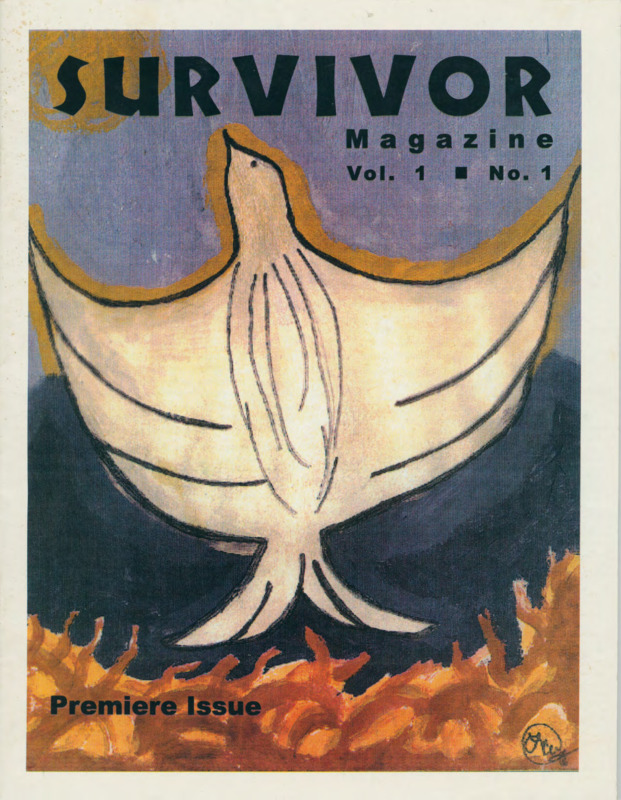
This magazine’s main goal is to call attention to women as the main victims of rape. More than that its goal is to help these women through the healing process after surviving such a traumatic event. Survivor is written and illustrated in a way that gives power back to survivors and reminds them it’s not their fault. This magazine is largely a collection of poems and illustrations that cover themes of rape, child molestation, power, control, and survival. The ending of this issue lists biographies of all contributors that are throughout this source. Another important theme throughout this text is that of victim blaming.