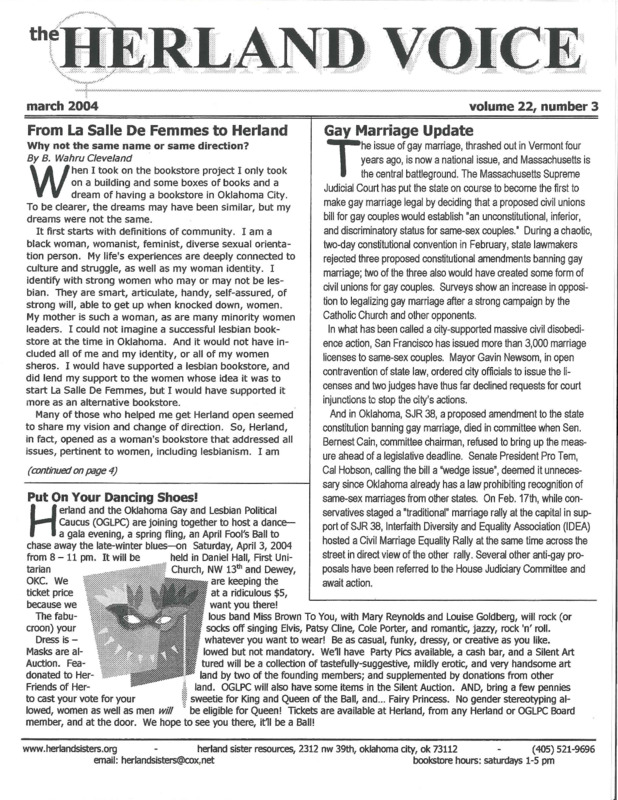
From La Salle des Femmes to Herland
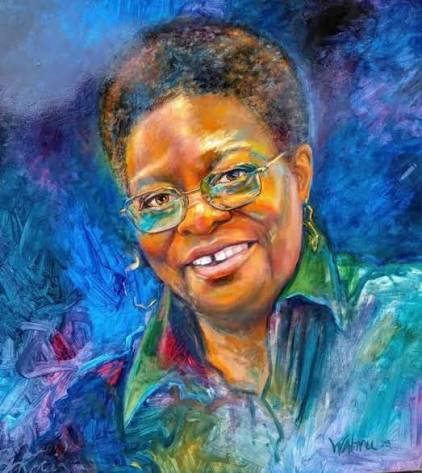
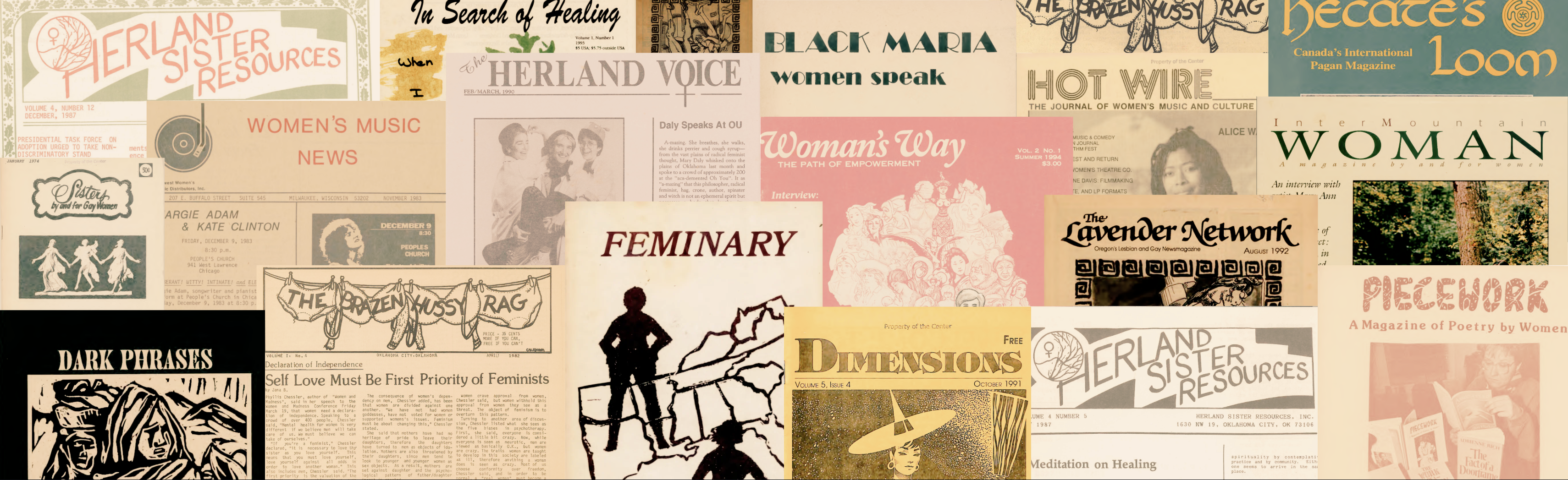
Herland Sister Resources developed out of La Salle des Femmes and the efforts of Oklahoma City women who wanted to sustain a lesbian feminist community space. After Barbara “Wahru” Cleveland took responsibility for the bookstore, she renamed the project Herland, a name that referenced Charlotte Perkins Gilman’s 1915 feminist utopian novel.
Wahru later reflected that when she took on the bookstore, she inherited “a building and some boxes of books and a dream of having a bookstore in Oklahoma City.” Her vision for Herland extended beyond operating a business. She understood the project as part of a broader need for community, shaped by her experiences as “a black woman, womanist, feminist, diverse sexual orientation person.” For Wahru, Herland was not only a lesbian space, but a women’s center grounded in culture, struggle, shared labor, and support.
Herland formed in a conservative political and social climate, during years when lesbian and gay communities often had to build their own support systems. Volunteers staffed the bookstore, maintained the lending library, organized events, published newsletters, sold and lent books, collected women’s music, and planned retreats. The organization became part of Oklahoma City’s queer and feminist infrastructure. It was not always highly visible to the broader public, but it was deeply important to the people who relied on it.
In 1985, Herland’s members formed a nonprofit collective called Herland Sister Resources. To receive nonprofit status, the group established a board of directors. The board operated through a feminist consensus model, giving each member an equal voice in decision-making. This structure reflected the organization’s commitment to shared responsibility rather than hierarchy.
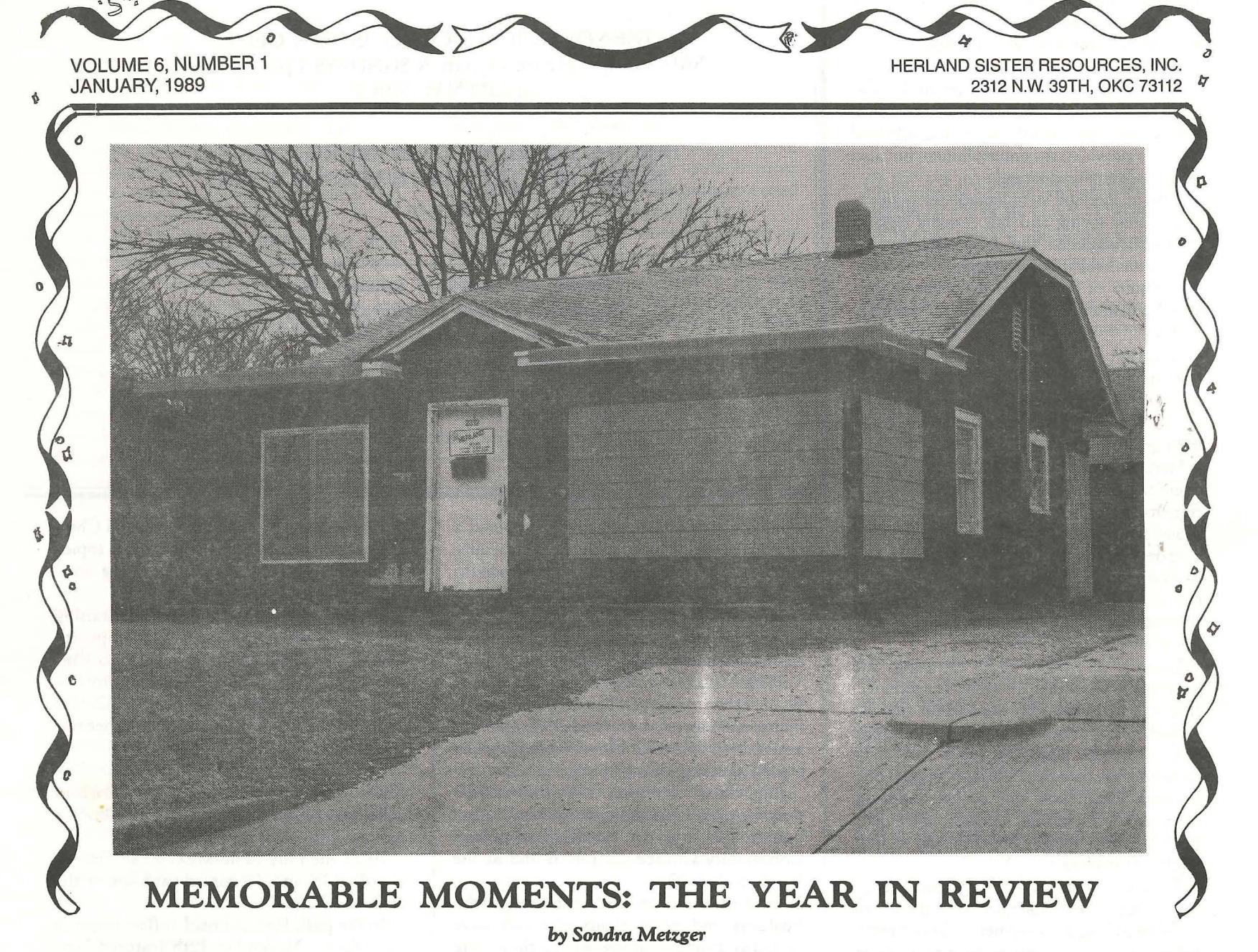
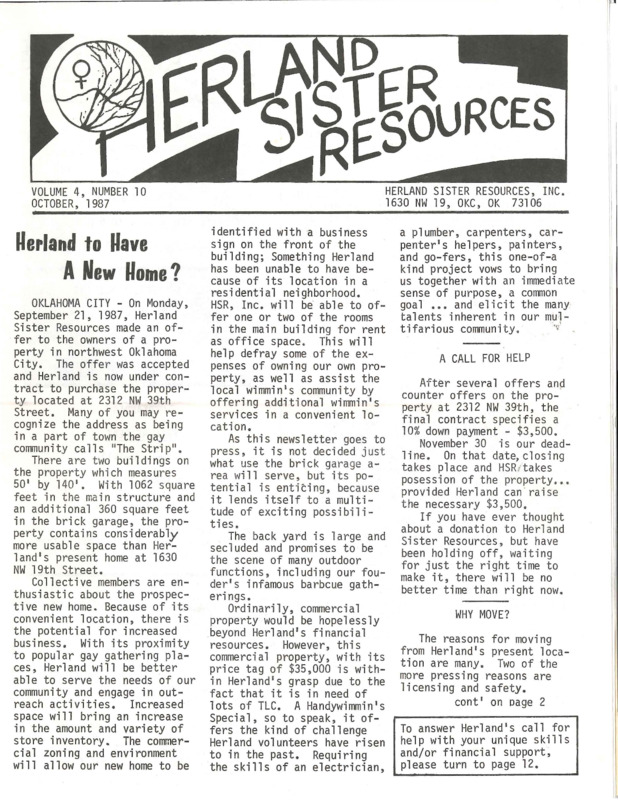
In 1987, Herland Sister Resources purchased a building at 2312 NW 39th Street to house the collective. Members spent more than a year renovating the space, and in 1988 they held a grand opening celebration, which included music by member Peggy Johnson. Johnson later described Herland as “that place to be, that space to unfold,” recognizing the organization as a space maintained not for personal or material gain, but for community.
"Thanks especially to Barbara Cleveland and the early ones, Herland was started. Thanks to the current activists, Herland still lives. May she be a beacon to those who have yet to discover the sense of community and the sense of place found only in a group of women dedicated not to personal or material gain but rather to maintaining that place to be, that space to unfold into the women that we could be--ourselves. - Peggy Johnson