Community Organizing
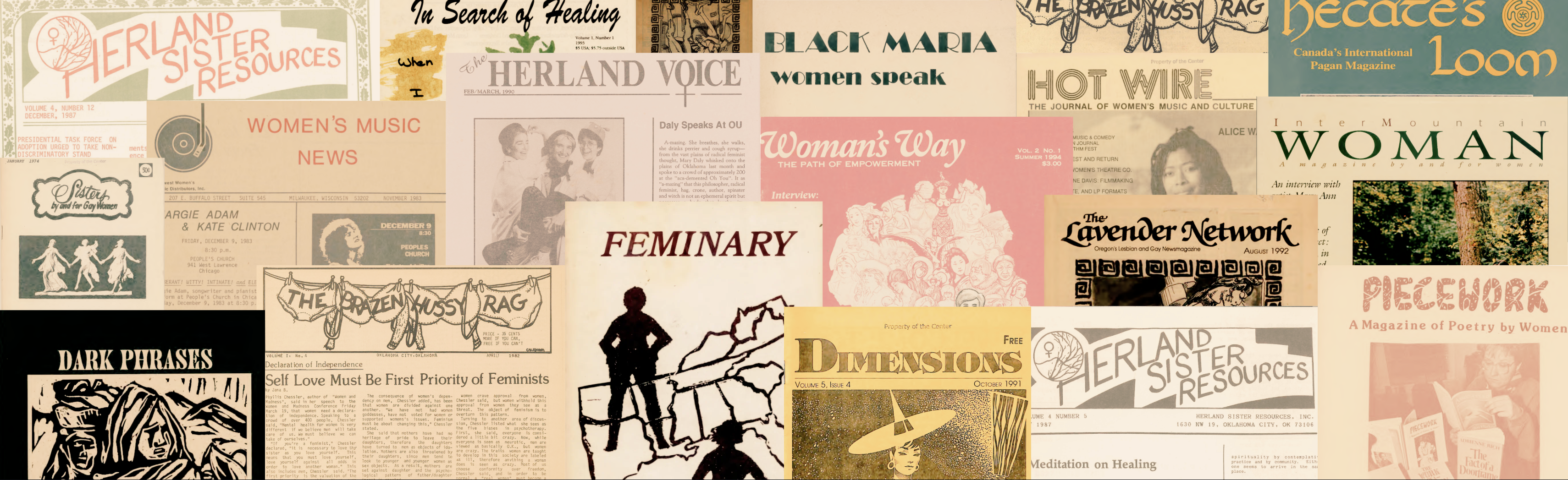
Herland Sister Resources’ history includes many forms of community organizing. While the organization participated in activism and public advocacy, much of its work focused on creating spaces where women could gather, learn, socialize, and support one another. Herland organized music events, coffeehouses, workshops, retreats, discussions, and social gatherings. These programs provided opportunities for women to meet one another, share resources, and build community outside of mainstream institutions.
The bookstore and lending library helped support this work. Herland provided access to feminist and lesbian fiction, nonfiction, periodicals, records, and other materials that were often difficult to find elsewhere in Oklahoma. These resources connected local women to broader feminist and lesbian feminist movements while also supporting community life in Oklahoma City.
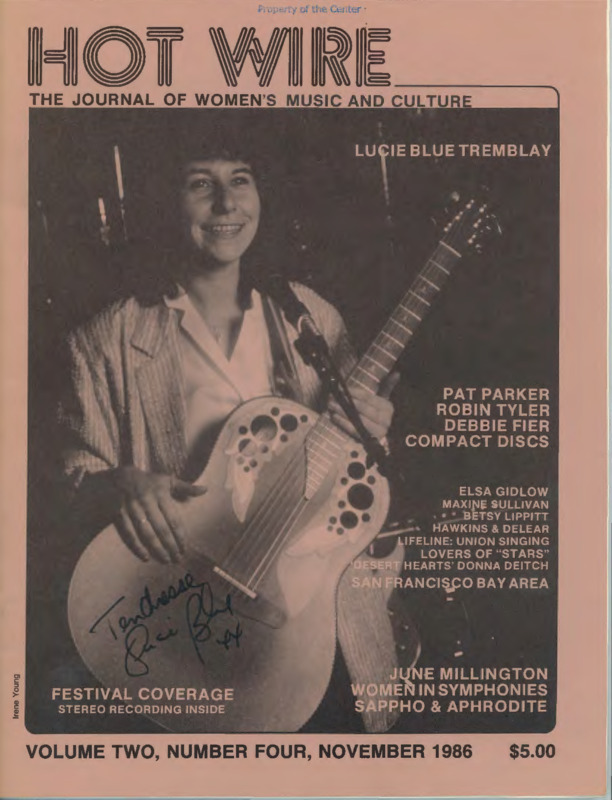
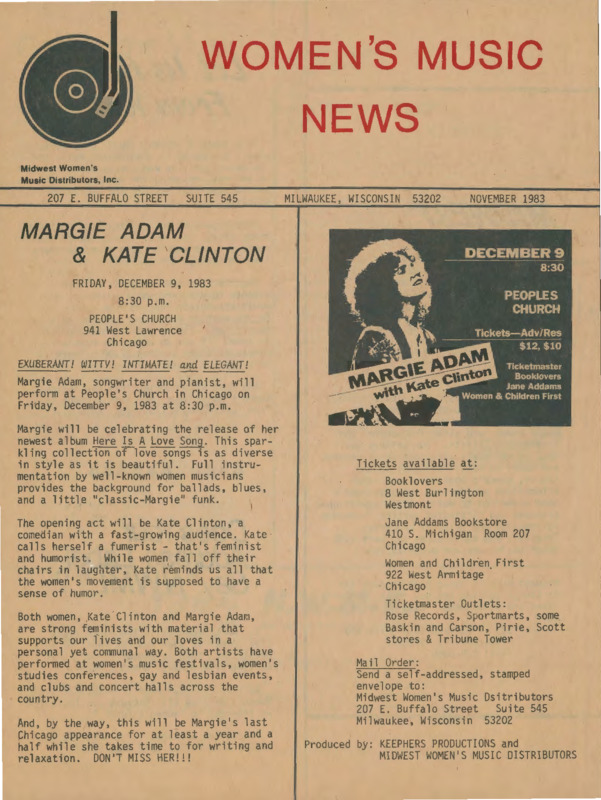
Music was a central part of Herland’s community programming and connected the organization to the larger women’s music movement of the 1970s and 1980s. Women’s music was closely tied to lesbian feminism during this period. It created a cultural network through which women could hear openly lesbian and feminist performers, attend women-centered concerts and festivals, and participate in spaces organized outside of male-dominated music industries. For many lesbian feminists, women’s music was not only entertainment but also a form of political expression, community building, and cultural visibility. Herland’s music events and newsletter features placed Oklahoma City within this wider movement.
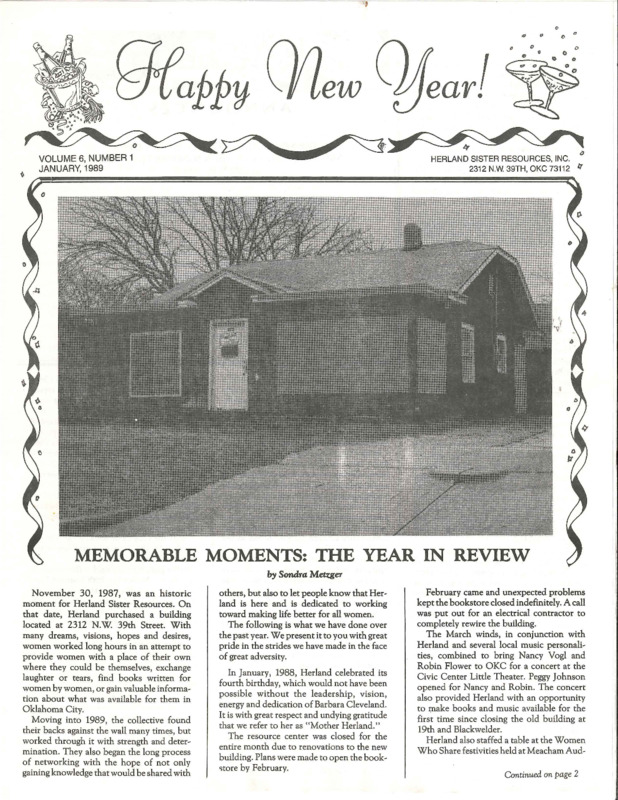
Retreats were an important part of Herland’s annual calendar. Usually held in the spring and fall, the retreats took place at state parks and were open to women who registered in advance. They brought together women from Oklahoma and surrounding states for workshops, seminars, music, recreation, and social time. In a 1988 annual review published in the Herland Sister Resources newsletter, Sondra Metzger described the retreats as one of Herland’s “trademark festivities.” She noted that the spring retreat was held at Boiling Springs State Park and included musical entertainment by the Sisters of Swing and the Shartels. Metzger also emphasized the labor involved in planning these events, writing that Herland’s camp director, Laura, spent more than 800 hours each year organizing retreats, reserving campsites, arranging workshops, scheduling entertainment, and planning activities.
One of Herland's trademark festivities is the annual spring and fall retreats held at parks throughout the state. The spring retreat was held at Boiling Springs State Park. The Sisters of Swing and the Shartels provided musical entertainment on Saturday night . . If you have never attended a retreat, you're not only missing an opportunity to meet women from all over Oklahoma and surrounding states as well, but you're also missing a great time. Herland's camp director, Laura, spends over 800 hours each year organizing the retreats. After setting dates and reserving a group camp at a state park, she arranges with a variety of women to hold seminars and workshops during the weekend and to entertain on Saturday night. She also schedules sporting events and other activities to ensure everyone has a good time. Laura is very picky about campsites and selects only those that are somewhat secluded. If you were under the impression that we "roughed it", that we slept in tents and were without indoor plumbing, guess again. The campsites are usually made up of several cabins with bunk beds, one or two buildings with restrooms and hot showers, and a main building with tables, benches and a fully equipped kitchen. - Sondra Metzger
Both local and national women musicians were celebrated by Herland, and live music was featured at many events. The newsletters often included articles spotlighting local women musicians, documenting the importance of women’s music to lesbian feminist culture and community life.