Herland Activism
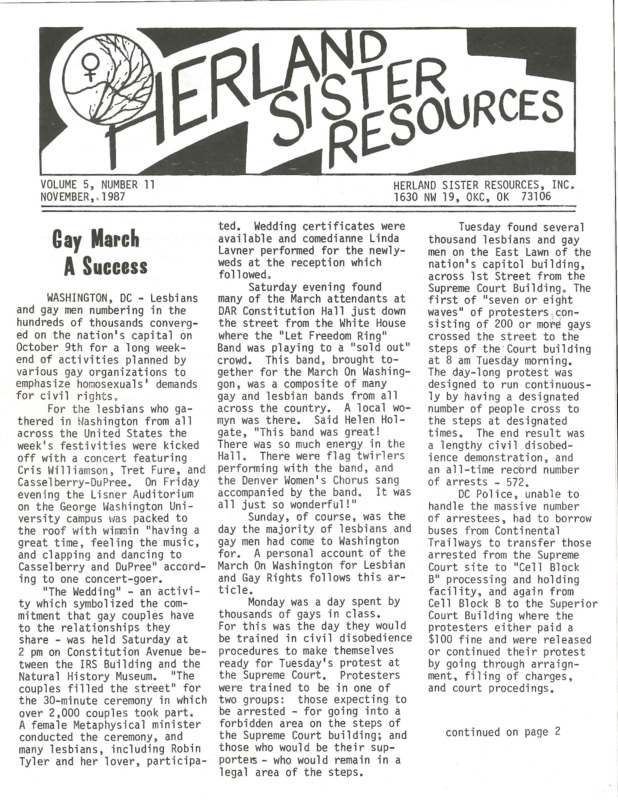
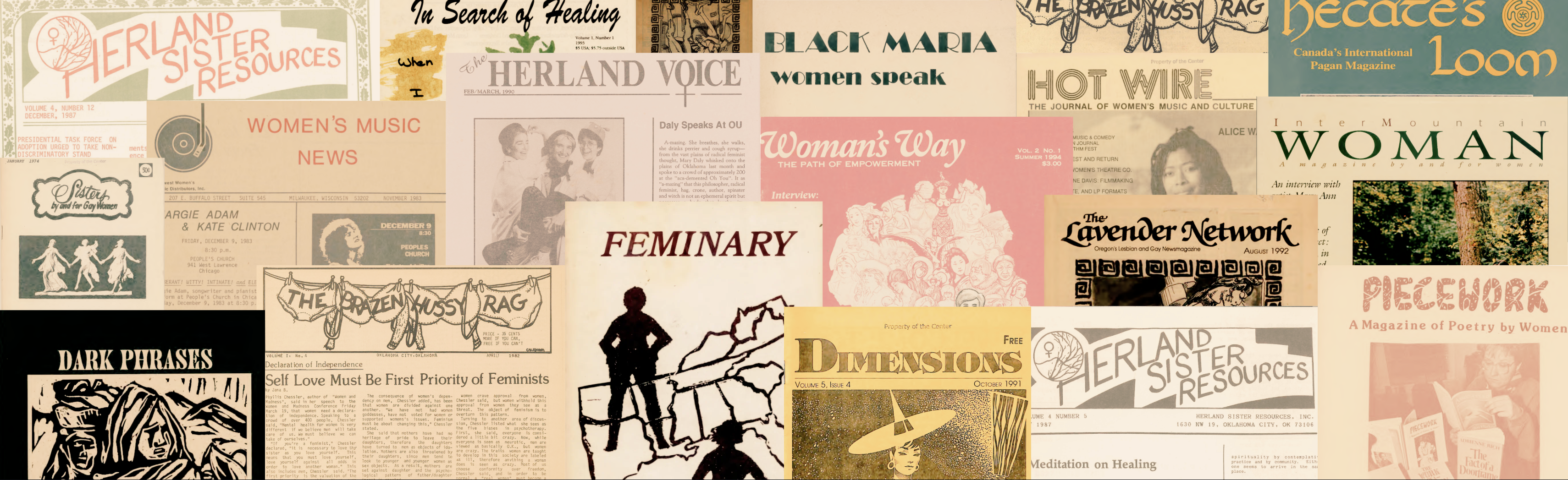
Herland Sister Resources’ activism grew out of the same community networks that sustained its bookstore, lending library, newsletter, and events. The collective supported causes related to women’s rights, children’s rights, lesbian and gay rights, anti-violence work, racial justice, reproductive freedom, and queer family recognition. Its activism took many forms, including protest, volunteer labor, fundraising, Pride participation, legal support, and public education.
Some of Herland’s activism took the form of public protest. In 1991, members of Herland traveled to Wichita, Kansas, to participate in pro-choice counter-demonstrations during Operation Rescue’s “Summer of Mercy” campaign against abortion providers. Herland also participated in anti-violence work. The organization supported Take Back the Night rallies, which addressed sexual violence, rape, abuse, and victim-blaming. Barbara “Wahru” Cleveland helped with early Oklahoma Take Back the Night efforts, and Herland members continued to support the rallies as the collective developed. These events gave survivors and supporters a public space to speak, march, and challenge the idea that responsibility for violence belonged to victims rather than perpetrators.
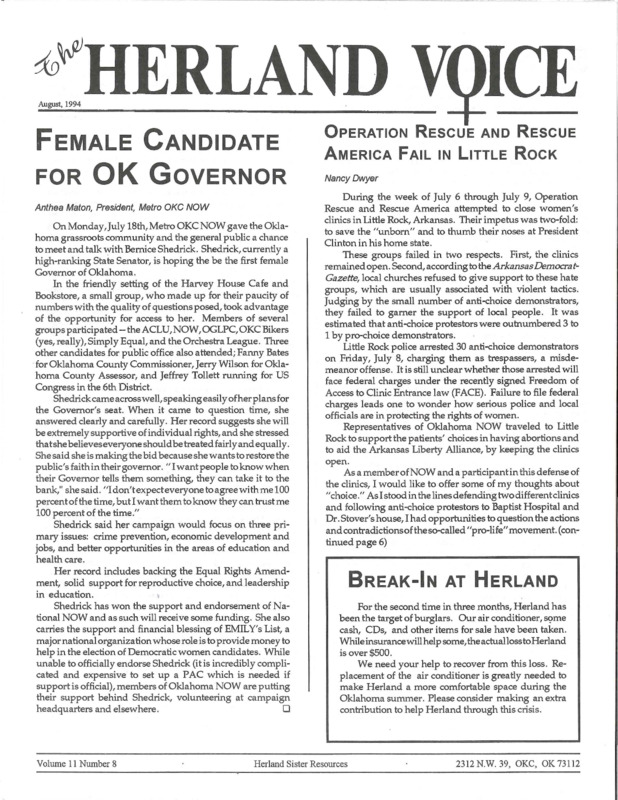
This anti-violence work extended into support for domestic violence and sexual assault survivor advocacy and women’s shelters. Herland members supported the YWCA Women’s Center, Rape Crisis Center, and battered women’s shelter through volunteering, fundraising, and awareness work. After tensions with the YWCA over lesbian gatherings, Herland continued to support rape crisis work while also moving lesbian-centered programming into Herland and other queer community spaces. Members helped sustain a rape crisis phone line and supported advocacy connected to broader services and legal reforms around sexual violence.
Herland’s activism was also visible in Oklahoma City Pride. The first Oklahoma City Pride Parade in 1988 and later Pride events depended in part on Herland’s support, fundraising, and volunteer labor. Through Pride, Herland helped create public visibility for lesbian, gay, bisexual, transgender, and allied communities in a state where queer people were often expected to remain private or invisible. Pride was both a celebration and a political statement: a claim to public space, community identity, and the right to exist openly.
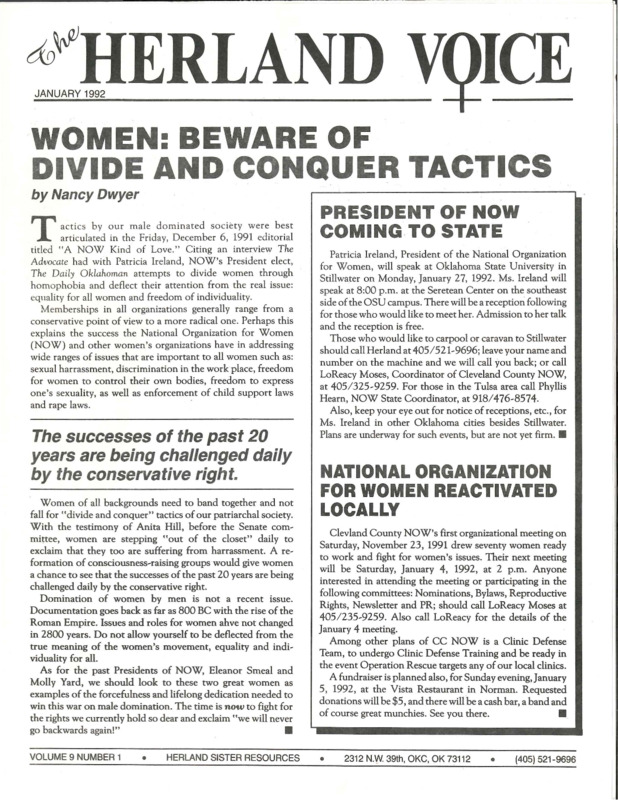
One of Herland’s most significant activist efforts was the Herland Legal Defense Fund, formed in 1992 to support Donna “Doni” Fox in a lesbian custody case. The fund raised money through donations, dinners, dances, Mother’s Day cards, and the sale of a community cookbook, Family Cookin’. This support helped make Fox v. Fox possible, contributing to legal precedent for lesbian and queer parents in Oklahoma. The fund continued after the Fox case in supporting other lesbian mothers.
Herland’s activism was not limited to a single issue. Across its history, the collective supported organizations and causes including NOW, the Oklahoma Gay and Lesbian Political Caucus, efforts against anti-gay and anti-lesbian marriage laws, Black Lives Matter, Standing Rock water protectors, battered women’s awareness, Global Day of Action, and other feminist, queer, Black, Indigenous, and women-centered causes. Through this work, Herland connected local lesbian feminist organizing in Oklahoma City to wider regional, national, and international movements.
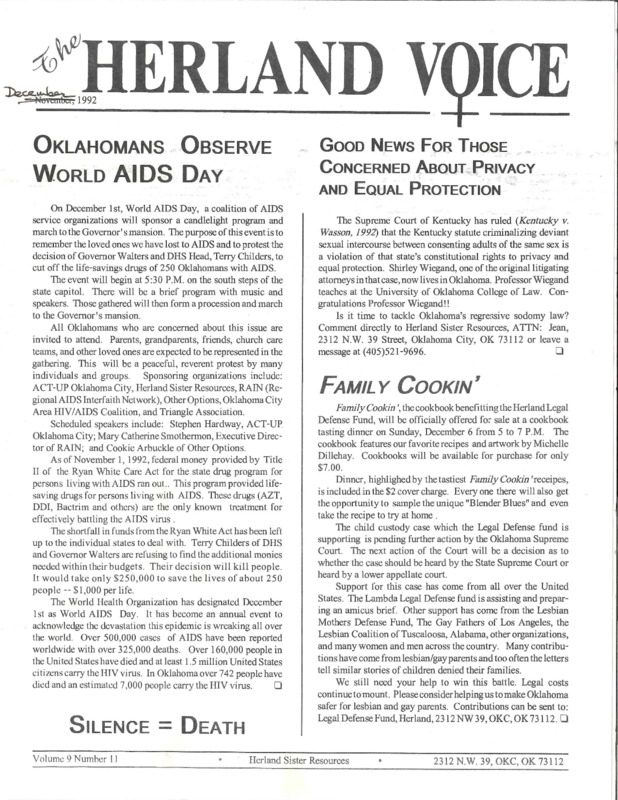
Herland’s activism shows that community work and political work were often inseparable. The collective’s members marched, sang, raised money, answered phones, wrote articles, organized events, supported legal cases, and preserved records of their efforts. Their activism was built through repeated acts of care and persistence, and it helped expand what queer and feminist life could look like in Oklahoma.